As the game industry continues to evolve, so does the immersive technology that powers it. And each new advancement gives us a glimpse of what the future holds.
Augmented Reality (AR) and Virtual Reality (VR) have already made their mark, offering gamers new ways to engage with the digital world. But there’s a new addition, Mixed Reality (MR), emerging as the bridge between these two worlds—combining the real and virtual world in ways that push the boundaries of interaction and immersion.
From AR to MR: The Evolution of Immersive Gaming
With AR gaming, we’ve seen firsthand how digital elements can be brought into the real world by overlaying them onto the physical environment. AR is often seen in mobile games, where players interact with digital objects through their phones or tablets. However, AR’s primary limitation is that the digital elements exist separately from the physical space—they’re just visual enhancements, not fully integrated parts of the world.
Mixed Reality, on the other hand, bridges the gap by making virtual elements behave as though they are real in space, allowing users to manipulate and interact with both real and digital objects seamlessly.
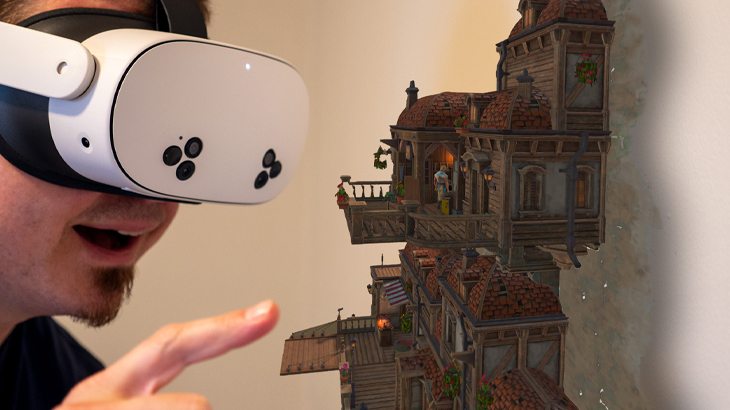
Wall Town Wonders - Cyborn B.V.
(Image Credit: Nicholas Sutrich / Android Central)
And this technology is set to make quite an impact:
MR games were featured in GDC's 2025 Trends Report, highlighting how the medium is gaining ground due to its accessibility for those with spatial sensitivity (compared to VR), as well as the possibilities it opens up for multiplayer and social gaming.
Grand View Research’s market analysis report also backs this up, stating that the global mixed reality market size is projected to grow 34.8% from 2024 to 2030.
What Sets MR Apart
MR’s key distinction is that it doesn’t just overlay information—it integrates virtual and real-world elements in real-time. Mixed-reality devices like Meta Quest 3 have been leading the way by blending digital and physical worlds into one interactive space. Digital objects can respond to real-world actions and environments, making the gameplay far more immersive and interactive than AR alone.
For instance, in AR, you might see a digital dragon perched on your table, but in MR, that dragon can bump into real-world objects, react to changes in lighting, or even interact with real-world physics.
Take the MR simulation game Living Room for example, where you can transform your home into a vibrant animal habitat and look after virtual pets:
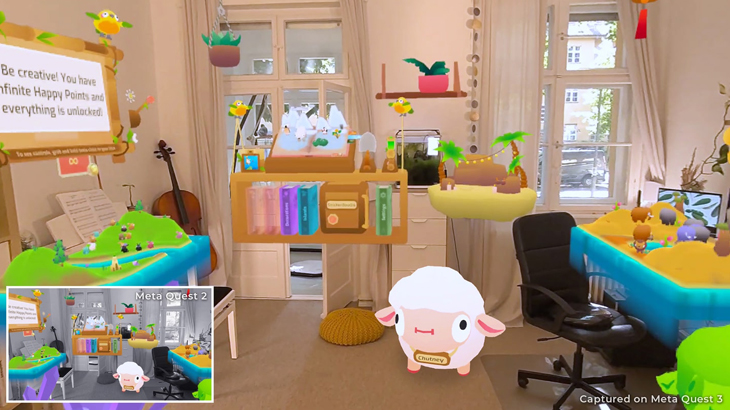
Living Room - Thoughtfish GmbH
Or, in a more lively, competitive environment, you can shoot slimeballs across your kitchen table at your friends in Slimeball!:
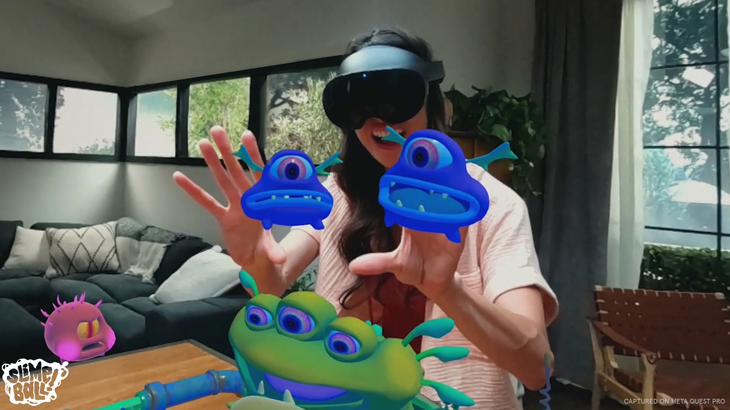
Slimeball! - Hackett and Skillman
There are many more games with social and multiplayer options, too. Track Craft is a racing game where you can turn your surroundings into a racetrack, alone or with friends:
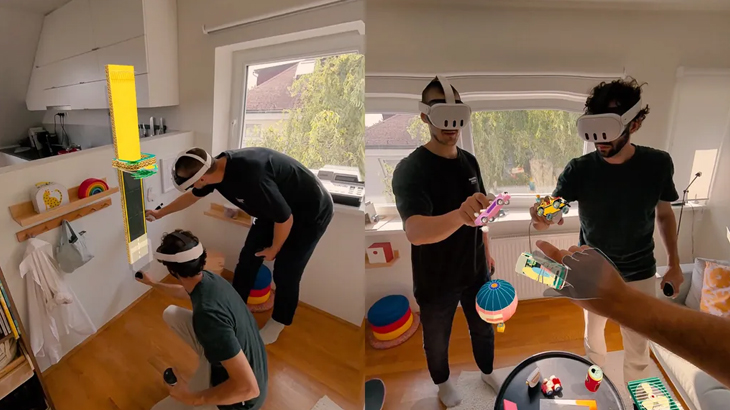
Track Craft - Brainz Gamify s.r.o
(Image Credit: Mogura VR)
The possibilities are truly endless. Whereas advanced AR technologies can simulate basic interactions through spatial mapping and AI, MR achieves this integration in real-time, creating a deeper sense of immersion. But with this greater immersion comes a new set of challenges—especially when it comes to testing these games before release.
Challenges of Testing MR Games
Given the technical complexity of MR games, there are several key challenges that quality assurance teams must address before such games arrive in players’ hands:
 Real-World and Virtual Interaction
One of the most complex aspects is ensuring virtual elements interact naturally with real-world objects. For example, in MR gameplay, a player might use a real-world tool or object to interact with digital characters. The challenge lies in making sure that when the player throws that object, it registers accurately and produces a meaningful in-game response. Making these interactions feel intuitive and immersive requires rigorous testing, both for functionality and for the integration of real-world physics into the virtual environment.
 Spatial Mapping and Environmental Variability
MR games are played in real-world spaces that vary dramatically from one user to another. Testers must therefore account for an extensive range of environmental factors such as different lighting conditions, presence of mirrors or glass surfaces, moving objects, and cluttered or empty spaces. Ensuring that the game functions reliably across such unpredictable environments is a unique challenge in MR testing, as these elements can interfere with object detection, tracking accuracy, and even gameplay mechanics.
 Gesture and Voice Recognition
Unlike traditional game controls, MR interactions depend heavily on how well the system understands user gestures and speech. During testing, variations in hand size, clothing (e.g., long sleeves, gloves) and lighting conditions can cause hand-tracking issues. Voice recognition may not work well in noisy environments or for players with different accents. This requires testers to simulate a wide range of real-world scenarios and user types to ensure consistency and fairness in the gameplay experience.
 Performance and Latency
Performance optimization is another significant challenge when testing MR games. Any lag or even a second delay between a player's physical action and the corresponding virtual response can disrupt immersion or lead to player frustration. Testing teams must rigorously measure performance across different devices, track response times for interactions, and identify any situations where frame rates drop or latency affects gameplay experience.
 User Safety and Comfort
MR games often require physical movement within real spaces, which introduces the challenge of testing for user safety and comfort. Testers need to verify that game mechanics do not encourage risky behaviors like rapid movements near real-world obstacles or unsafe gestures. Additionally, aspects like motion sickness, eye strain, or disorientation need to be identified during testing, especially in longer gameplay sessions.
Expanding the Horizons of Gameplay
With the introduction of MR, the possibilities for more immersive and dynamic gameplay expand dramatically. MR opens opportunities for entirely new gaming experiences, such as collaborative multiplayer games where users can interact in both the physical and digital realms. So, players in the same room will be able to interact with real and virtual objects, combining their efforts to solve puzzles or defeat enemies.
MR also promises to revolutionize single-player experiences. For instance, in a puzzle-solving game, players might physically walk through a room, interacting with real and virtual objects to complete challenges. This immersive interplay between reality and digital content creates endless opportunities for game designers and developers to push the boundaries of what’s possible.
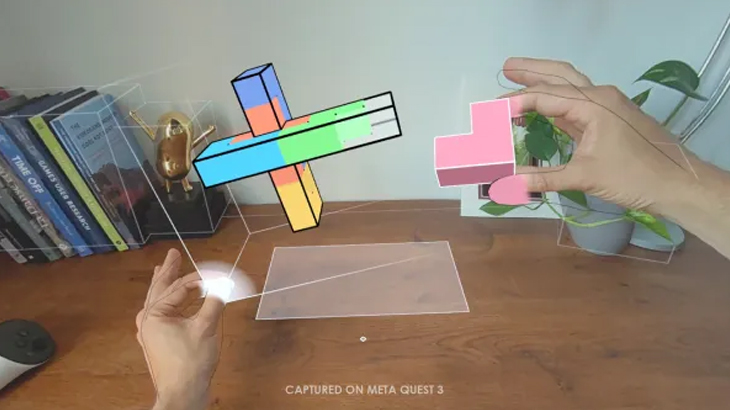
Cubism - Vanbo
MR as the Future of Immersive Gaming
Mixed-reality gaming offers an exciting middle ground between the immersive virtual worlds of VR and the real-world integration of AR. While AR applications have become more interactive and VR provides total immersion, MR enhances both technologies by combining them.
However, it’s essential to acknowledge that the distinction between AR and MR may sometimes blur. Modern AR technologies already incorporate some level of interaction, but MR takes this further by ensuring that virtual and real-world elements can seamlessly coexist and influence each other. This distinction, while subtle, is what positions MR as a transformative force in the future of gaming. Players will be able to do things like climb mountains, fend off zombies, and essentially have access to vast digital worlds without ever leaving their living room.
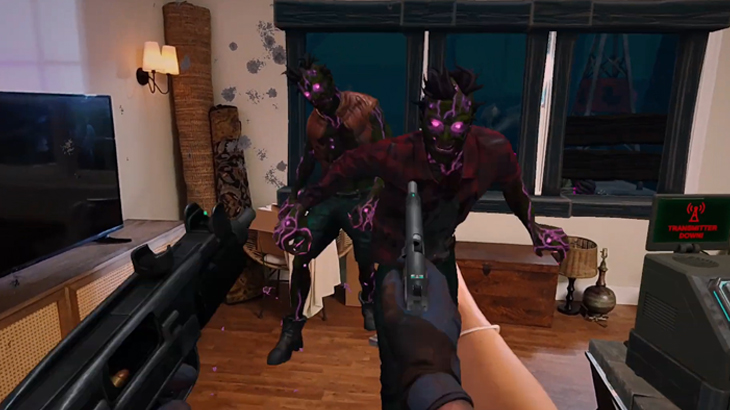
Drop Dead: The Cabin - Soul Assembly
So, Why Should We Be Excited About MR?
MR has the potential to completely change the gaming experience. We're talking about games that are so immersive you won't know where reality ends and the game begins—they’ll be the ultimate escape room that can be set up anywhere.
And it's going to be a blast for everyone involved—game devs, testers, and players. It's like we're all going on a wild ride together, and nobody knows where it's going to take us. So, grab your controllers, put on your headset, and let's get ready to blur the lines between the real and the digital in the most epic way possible.
If you’re developing games for MR and need an extra hand, our team has over 30 years’ experience working with games of all shapes and sizes, on all platforms. Whether you need game testing or game development support, get in touch and let’s see what we can build together.