In the world of game art production, iteration is inevitable. From conception to launch, each phase of game development presents opportunities to refine and enhance a game’s looks and design—but excessive iteration risks lowering team morale, endless delays, and even game cancellations.
In this article, we draw on the insights of our Global Art Director to illuminate best practices for normalizing iteration throughout the production pipeline, helping to avoid excessive rework and crunch, and reframing iteration so that it isn’t seen as a threat for artists, but rather as a cornerstone of progress.
Balancing flexibility and stability across teams
There is a natural tension between projects needing iteration to improve over time, and teams needing commitment. But how do we reconcile the designer’s need for flexibility with the artist’s need for stability to finalize content, without feeling their efforts are wasted due to constant pivot?
Both perspectives are valid at different production phases, and iteration can certainly be both a risk and a benefit. With proper planning and open communication, teams can feel aligned and allow for this iteration to take place comfortably.
Iteration in each phase of game production
As a first step, it can be helpful to map out the typical phases of game production. Looking at the entire pipeline in a holistic way, including the changes in direction that can come about in each phase, can allow teams to better plan for when iteration might arise down the line and how to deal with it.
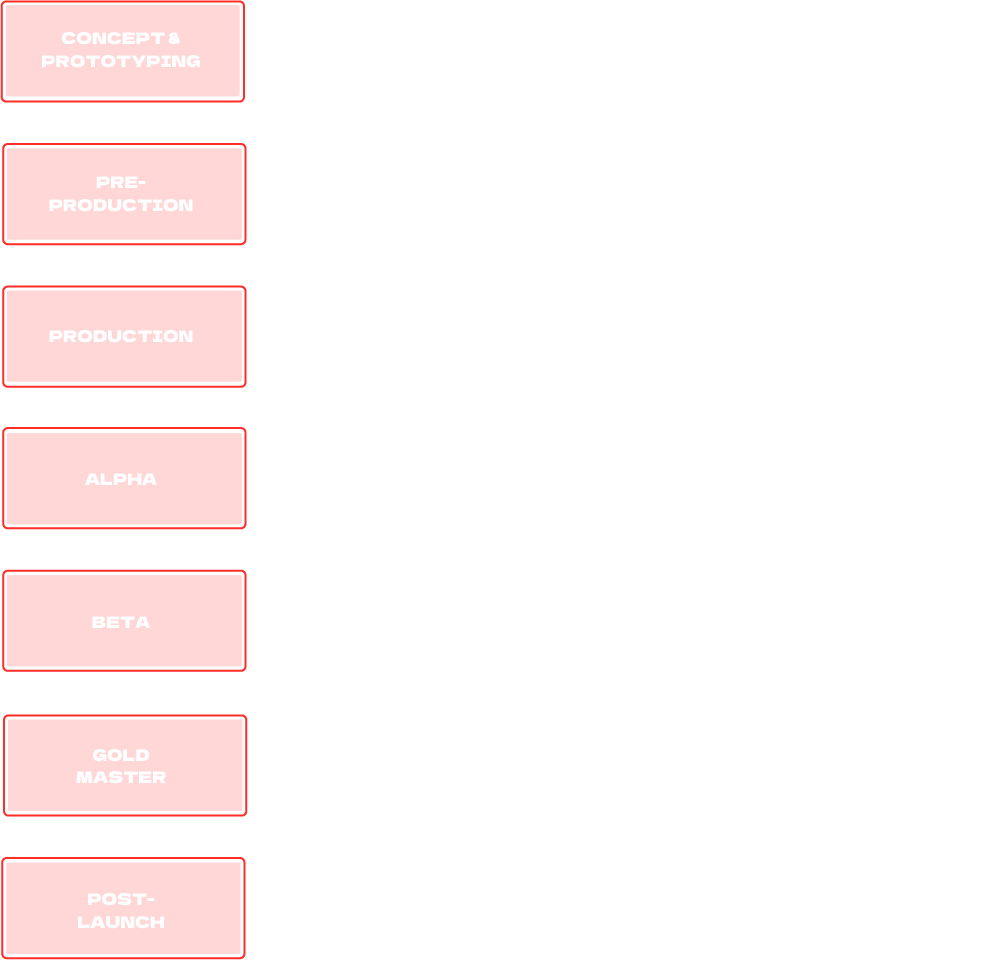
Each phase’s natural iteration points can pose risks of significant art rework. Product strategy and vision updates can happen throughout, and each landmark “achievement” is fragile: any later changes can have cascading effects to the work done during the earlier phases.
For instance, a game could start off being developed as a platformer with an edgy vibe, targeted toward mature audiences. But as the project progresses, deals and conversations happen with lawyers, investors, and publishers—suddenly, the game needs to be re-done in a way to make it more kid-friendly. That means the art style needs to be re-done, and the combat needs to be toned down or entirely re-thought. The in-game VFX must also be changed now that the game will be launched in countries where blood can’t be shown.
This is just one example that illustrates the many elements that need to be discussed when changes happen to a game, showing how any iteration can be both risky and beneficial to the health of a project.
Diagnosing healthy vs. unhealthy changes
Not all iteration is created equal. It can be helpful to classify changes into 2 sub-types: constructive (healthy) iteration that builds on previous work, and destructive (unhealthy) iteration that invalidates past efforts, such as in the previous “mature platformer” example.
While re-dos are a natural part of game development, unhealthy pivots resulting from poor planning and communication can lead to artists feeling resentment about their work “going to waste.”
Take another example of an art team who has completed a batch of beautiful characters for the first milestone of the game. Now the team is at milestone #2, and the higher-ups feel like they’ve been looking at the characters for too long. They don’t feel new and fresh anymore, so they decide: “Let’s do them again, but slightly different!”
The decision feels corrective, but it’s really destructive—and it’s very common to see in the game industry. The artists are left feeling puzzled: Why is this batch of characters from the first milestone—considered the pinnacle of artistry 3 months ago—now considered old and undesirable?
Part of the art director's imperative is to approach momentary whims with caution, and keep in check the game team’s hubris of chasing after the next new and shiny thing. Overall, teams shouldn’t be made to feel like they failed by succeeding.
Common triggers for art re-dos
Below, we outline some of the most common pivot points that can trigger art changes to a game:
- Feedback from playtesting: Players' feedback leading to design changes.
- Technical limitations: Original design not feasible with current tech. It could be game engine or game hardware related.
- Budgetary constraints: Project overruns leading to feature cuts.
- Shift in market trends: New industry trends making original concept outdated. As an example, a game could be developed as an MMO during a time when every game company is doing MMOs—and then, later on, it’s suddenly not trendy for the game to be an MMO.
- Internal politics: Conflicts within team or departments altering project direction.
- Power dynamics: A person of great influence overriding team consensus.
There are also numerous corporate-related decisions that can happen outside the daily game production challenges, which can alter a game’s trajectory:
- Strategic business decisions: Mergers, acquisitions, or shifts in company strategy.
- Sensitive financial information: Budget cuts or reallocations.
- Feedback from key stakeholders: Input from major investors or board members.
- Market research: Data that might not be shared with the entire team.
- Licensing or legal issues: Challenges or changes in agreements.
- Long-term company vision: Broader goals that might not be communicated in detail. Usually sensitive changes, not shared with the wider group.
With any big decisions that result in change, lack of context on the rationale for the change can breed discontent among teams. That’s why good communication and planning is key during every phase of game production. Sharing the “why” when communicating the change, whenever possible, can help mitigate distress felt among the team.
Within our team at Side, our Art leadership team advocates for open communication, involving artists in decisions, and acknowledging artists’ efforts, with the goal of getting everyone on the same page about normalizing iteration. It can be helpful to frame changes as ideas “maturing”, rather than ideas failing. Teams must segment the must-haves from the nice-to-haves when scoping out the game.
Summary
While iteration is inevitable throughout game development, mitigating unhealthy changes is key to ensuring internal and external success for a game and its artists. It takes cohesive team dynamics to normalize iteration, to view ideas as maturing over time, and to become a team that feels like it’s building upon past work together. Plan that there will be re-dos, and normalize feedback loops across departments for culture and effort scoping.
The onus falls on the game’s directors to foster a collaborative environment where iteration drives innovation without causing undue stress or resentment—which, as we’ve learned, can be achieved through open communication with the artists every step of the way, careful decision-making, and focusing on acknowledging and respecting artists' efforts.
Quotes
Frame changes as ideas “maturing”, rather than ideas failing. Segment the must-haves from the nice-to-haves when scoping out the game.
This article is part one of a series. Find part two here.