Within our audio team at Side Montreal and beyond, every team member shares a common passion: music.
At the heart of our team is a dedicated group of six professional composers specialized in game music. But beyond that, nearly every other member of our 20-person studio team—from project managers to sound designers and administrators alike—also has a musical background of their own, whether that’s singing, performing, or producing.
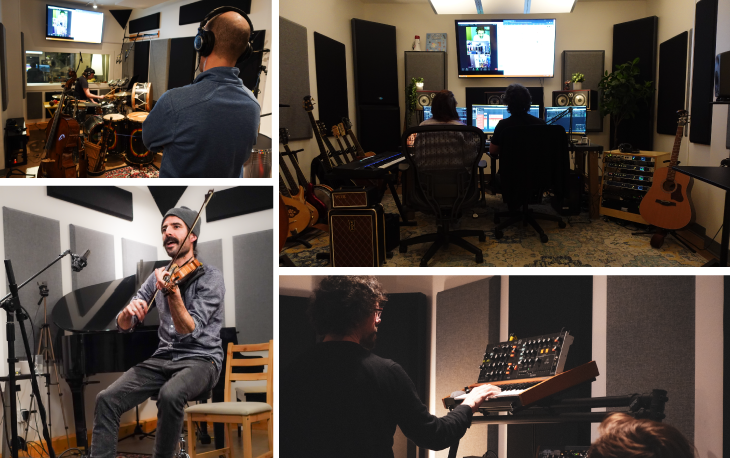
This shared expertise creates an environment where collaboration, improvisation, and innovation thrive, especially with everyone working together, in person, at our purpose-built studio. And one of the ways we capitalize on this collaboration is through team-based music composition.
Today, game music is often the product of collaboration. This is especially true for large-scale titles like Elden Ring or Star Wars Outlaws, where the sheer volume of music required makes teamwork essential. Even in the world of film, where iconic composers like John Williams or Hans Zimmer often receive top billing, a substantial support team of orchestrators, assistants, and additional creatives typically work behind the scenes to bring the score to life.
But what makes our team composition model unique is flat hierarchy and fluid collaboration—we compose more like a band than a scoring house. Thanks to our purpose-built studio, we jam, iterate, and exchange ideas in real time.
If you’re curious about enhancing your approach to music composition, here are some reasons why your next soundtrack might benefit from a team-based approach, along with tips for fostering the right studios environment, common pitfalls to avoid, and best practices.
Why compose as a team?
Collaborative composition means multiple musicians or composers co-creating a game’s soundtrack. Here are a few reasons why this approach works especially well in game development:
- Creative range: Each composer brings a distinct voice. For example, one of our composers Eliazer is classically trained and leans toward orchestral styles, our composer Carlyne specializes in experimental textures, while another of our composers, Francis, can build an entire rock band sound single-handedly.
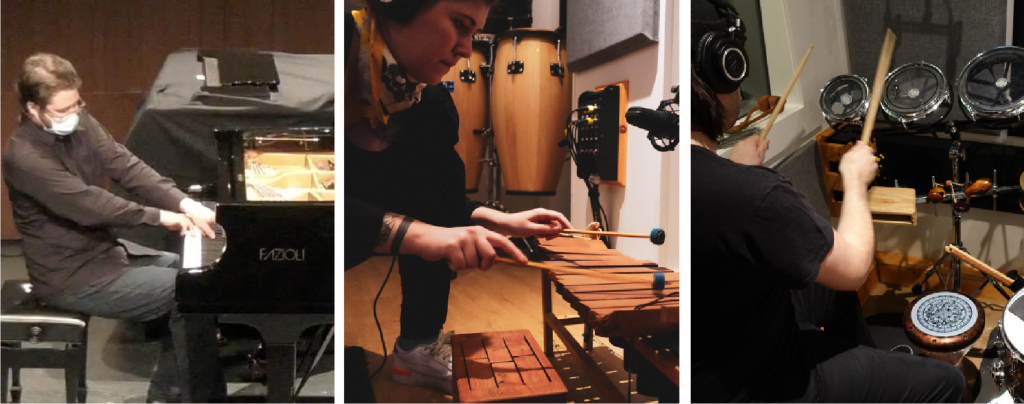
- Expanded recording capacity: With hundreds of instruments and several multi-instrumentalists on staff, we can quickly produce layered, original recordings in-house.
- Adaptable workflows: Composition workflows are deeply personal, but collaboration allows us to mix and match creative approaches depending on the project. This could mean live jamming sessions while we record, directed improvisations with one team member conducting while another plays, or collaborative theme development where initial ideas get passed between composers for further exploration.
- Momentum and morale: When someone hits a creative wall, the track can be passed to fresh ears that bring fresh ideas.
- Stronger pitching: Many musicians—and artists in general—find self-promotion awkward due to perfectionism or imposter syndrome. In contrast, promoting team-created work is often easier and feels more natural. Working as a team also allows for better internal collaboration during pitch prep, where we either submit multiple options or select the strongest one before presenting it.
What’s more, collaboration isn’t just fulfilling—it’s effective. A recent study found that 73% of employees who engage in collaborative work report improved performance, while 60% say it sparks their innovation.
But perhaps most importantly, it's simply more fun. Jamming, riffing, and experimenting together reconnects us with a fundamental truth that music is meant to be a shared experience.
Designing a studio for collaboration
So, it’s clear team composition has many benefits—but how do you do it? In our experience, the space in which you work makes a huge difference in fostering the ideal atmosphere for collaboration.
Physical infrastructure
Our experience during the COVID-19 pandemic was a decisive turning point in how we began to shape our current team-based workflow.
During lockdowns, while most studios were pushed toward remote work, our team saw an opportunity to secure a larger studio space than we previously had at a bargain price where we could finally build our dream creative environment. We meticulously designed a new custom studio from the ground up, with every aspect of the physical space purpose-built for collaboration, literally breaking down walls to create the optimal environment.
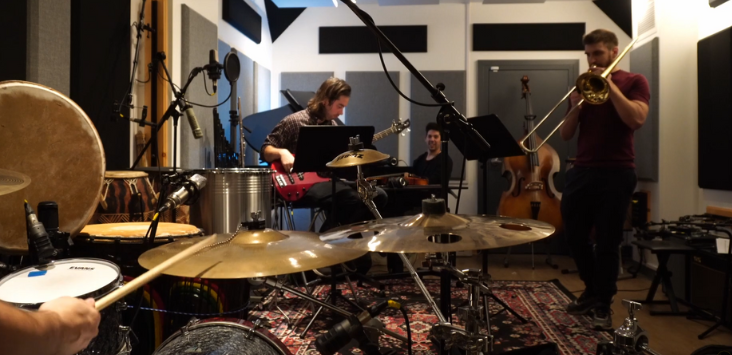
The result features three recording rooms, including a live room that can accommodate up to eight performers, along with a dedicated mixing room and an arsenal of over 300 instruments on-site. The layout includes separate areas for music, sound design, and administration to keep workflows streamlined.
Beyond individual rooms, the architecture of the studio was designed to facilitate movement between these different creative spaces, enabling our team to shift between tasks efficiently without losing momentum.
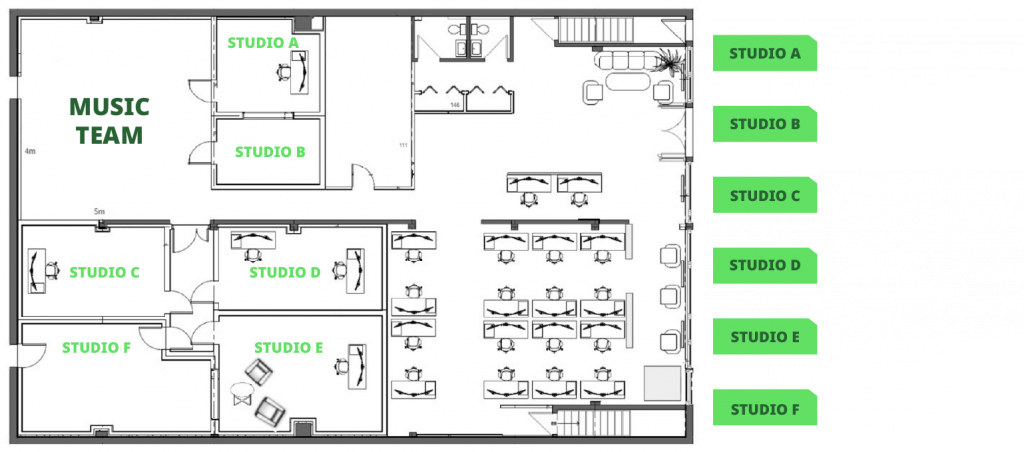
And when it came time to return to in-person work, the team didn't need convincing. While we previously worked in much more cramped quarters, we came back with full force into our space with the renewed, irreplaceable energy that comes from creating music and sound for games together.
Technical infrastructure
Aside from physical space, it’s important to set up digital infrastructures just as thoughtfully to allow for seamless collaboration between team members.
In our studio, every music computer we have is an exact clone: identical hardware and identical plugin libraries. This uniformity ensures that any session can be opened on any machine without compatibility issues.
All project files live on a central server and are accessed over a high-speed local network. The result is efficient performance that feels like working off a local drive, regardless of which workstation you're using. What’s more, each room comes pre-miked with easy routing throughout the facility. Whether recording synths, laying down drums, or tracking strings, everything stands ready to capture the creative moment with minimal setup time.
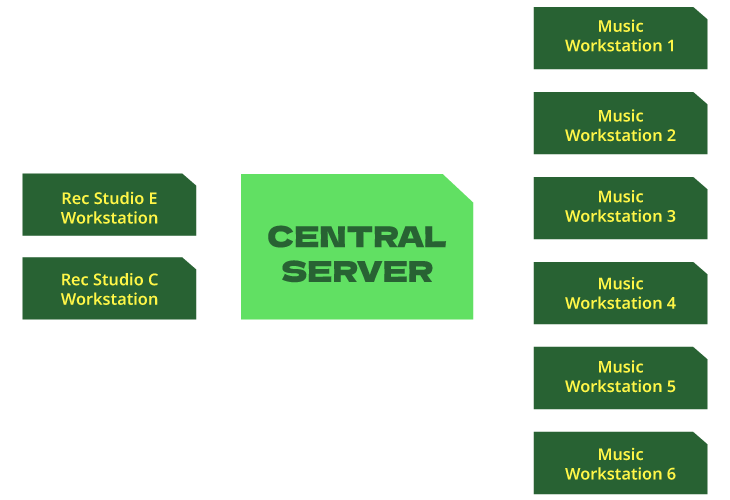
This infrastructure unlocks a rare level of creative fluidity. A composer might start a track in one room, move to another to record synths, hand it off to a teammate to add percussion, and then return later to refine the orchestration—all without exporting files or passing around drives. Everyone can contribute to the creative process in real-time, building on each other's work with ease.
What are the challenges of composing music as a team?
Collaborative creation does come with its own set of hurdles—but with the right systems and values in place, those challenges become part of the process.
Technical challenges
To keep everything running smoothly, we've made some key operational choices.
One major constraint is keeping our plugin library lean. Since every workstation is a clone, any software must be installed—and licensed—across all systems. This means that even a single plugin purchase quickly multiplies in cost. To help manage both logistics and budget, we rely heavily on subscription-based models, which offer the flexibility to scale up or down when bringing in external collaborators.
Then, to ensure everything stays in sync, we run monthly updates. All systems are updated simultaneously, preventing version conflicts and compatibility issues. And while plugins still play an important role, we increasingly lean on hardware and real instruments. This reduces software dependency and gives us more tactile control over our sound.
Managing creative dynamics
Like any artist, composers can have strong creative voices, and tensions can arise when someone feels their creative vision has been altered. Not every composer enjoys or thrives in teamwork—so choosing the right collaborators is crucial.
We've learned to cultivate a positive atmosphere that balances high standards with empathy. The key is encouraging open dialogue and constructive criticism. It can be challenging to navigate these dynamics, but when done right, it strengthens bonds within the team and makes the music better.
For us, the trade-offs are worthwhile. The benefits we gain—creative flexibility, technical consistency, and stronger team dynamics—far outweigh the additional time and effort required to maintain our synchronized systems and collaborative bonds amongst the team.
When not to compose as a team
While collaborative composition offers unique advantages, it's important to note that it’s not always the best approach. Team composition requires more time, coordination, and planning—you can't just throw composers in a room and expect magic to happen. For smaller projects or tight deadlines, this extra effort might not be worth it.
Solo composition also works better when a project needs a very specific musical voice or aesthetic. If you're after something laser-focused on one particular style, a single composer's consistent vision may work better than creative experimentation.
The key is aligning your approach to the project's scope. Sometimes, one brilliant mind is exactly what the music demands.
Best practices for team-based composition
Over time, we've developed a set of best practices to keep our collaborative engine running smoothly:
- To begin, we devote one afternoon at the start of each week for group feedback. This gives team members a chance to review each other's work, reflect on progress, and share ideas.
- To help us stay organized, we use spreadsheets and project management tools like Trello and Microsoft Planner to track progress and assign tasks more effectively.
- Time tracking is essential, too, especially when multiple people contribute to the same track, helping manage scope and ensure accountability.
- Knowledge sharing is woven into our workplace culture. Through internal workshops, team members teach each other new skills, tools, and techniques. Much of this shared knowledge is documented in our internal Confluence wiki, which includes everything from orchestral MIDI templates to synth manuals and naming conventions.
- We always stay open to external collaborators. Even with our wide range of in-house talent, we recognize the value of fresh perspectives, different backgrounds and specific set of skills.
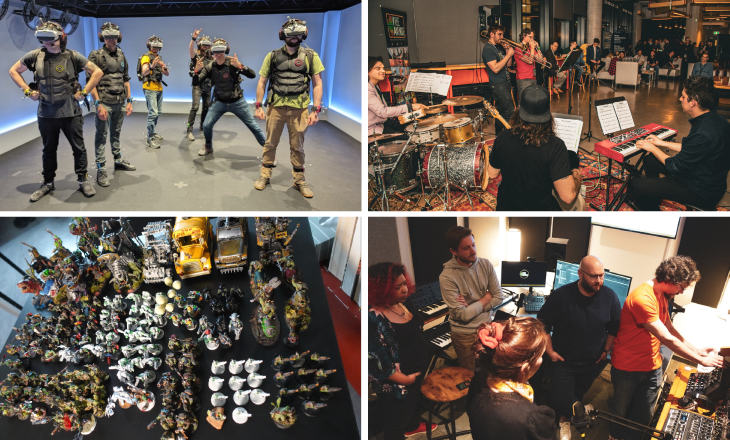
- And finally, crucially, we never lose sight of the fun. Warm-up games, jam sessions, and creative crossovers with other departments help keep the energy high and the culture vibrant.
Case study: Squid Game Virtuals
Bringing it all together, one of our recent highlights in music projects was the VR adaptation of Netflix's wildly popular Squid Game that we worked on with the team at Sandbox VR: Squid Game Virtuals. The original series' soundtrack is famously unconventional: off-kilter, eerie, and intentionally unsettling. The game, however, needed to maintain that distinctive weirdness while also being fun, digital, and energetic.
To strike this delicate balance, we embraced our jam-based workflow, creating custom textures by:
- Recording strange vocalizations
- Sampling and manipulating organic sounds
- Layering in drum machines and synths to add energy and playfulness
The result was a hybrid soundscape that captured both the unease of the original and the playful spirit of the game—built through live experimentation and collaborative creativity. While that same result might have been reached by one single composer, working together was faster, more enjoyable, and resulted in a lot of happy accidents and unexpected ideas. Check it out below:
https://www.youtube.com/watch?v=Uapov4XoCzE
Looking forward: Continuous improvement
We continue to expand and evolve our collaborative approach. Our office setup and production processes may be completely different in the next two years—not in the least because rapid adaptation is crucial in the ever-shifting landscape of the game industry, with new technologies popping up all the time.
We see room for growth in increasing cross-departmental collaboration as well between our music, sound design, and voice production teams, especially as we expand all of these services globally at Side. For instance, musical textures can be blended with sound effects in innovative ways—as seen in projects we’ve worked on such as Season: A Letter to the Future, where audio recording became a central part of gameplay.
We're also exploring remote-friendly setups for working with external composers, including mirrored workstations and tools like Parsec to extend our collaborative model beyond our physical space when necessary.
Another focus is tighter integration of music design and implementation into the broader audio pipeline. With our unique mix of creative and technical skills, we're well-positioned to bring music into the game development process earlier and more holistically.
For me and the rest of the team, regardless of how our tools and processes will evolve, the mission remains simple: Make great music, together.
If you’re looking for a creative partner for your next project, let’s collaborate—it’s what we do best!
For more on our latest projects, check out our music reel below:
https://www.youtube.com/watch?v=JUtub8HjKao