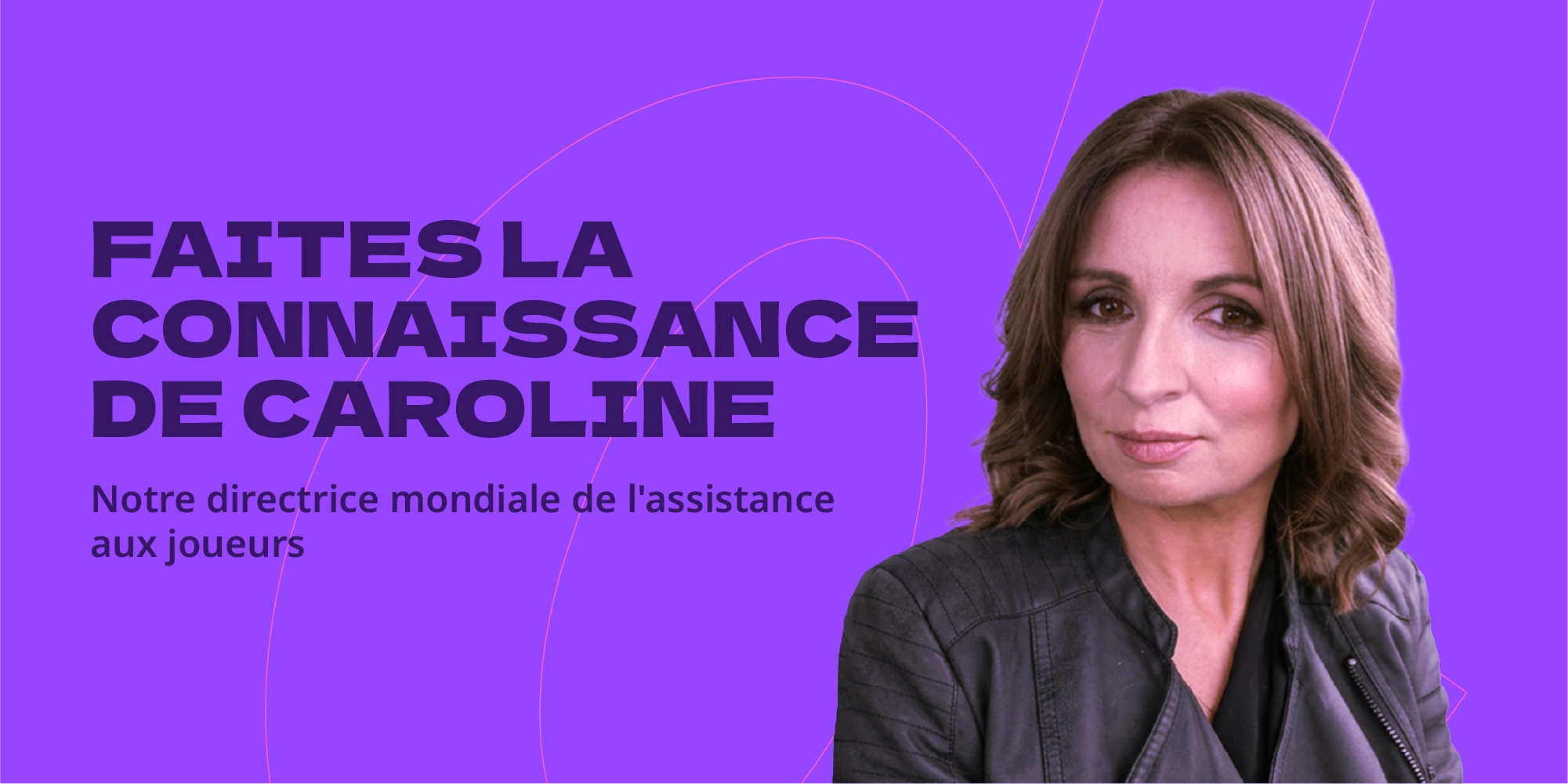
Caroline McDonald a rejoint Side en 2025 et occupe le poste de directrice mondiale de l'assistance aux joueurs. Forte de plus de 15 années d'expérience en matière d'expérience client, d'exploitation de jeux vidéo et de transformations à grande échelle, Caroline a occupé des postes de direction chez EA et Arise et a accompagné de grands développeurs et éditeurs, notamment Warner Bros. et Ubisoft.
Pour marquer sa première année chez Side, nous discuterons, lors de cet échange avec Caroline, des points suivants : son parcours dans le secteur des jeux, l'investissement émotionnel derrière chaque interaction avec les joueurs, la relation évolutive entre la technologie et le jugement humain, et sa vision de l'avenir de l'assistance aux joueurs.
Parlez-nous de votre parcours et de ce qui vous a attiré dans l'industrie du jeu vidéo.
J'ai toujours travaillé dans le domaine de l'expérience client, à l'origine, à des postes plus traditionnels, dans des secteurs très différents. En 2011, une opportunité s'est présentée : rejoindre BioWare, au service d'assistance aux joueurs pour Star Wars: The Old Republic.
Le jeu vidéo n'était honnêtement pas un secteur dans lequel j'aurais envisagé de travailler, car je ne joue pas. J'ai essayé de nombreuses fois, aussi bien quand j’étais plus jeune que depuis que je travaille dans l'industrie, et franchement, je suis vraiment nulle.
Certains responsables avec qui j'avais travaillé auparavant m'ont encouragé à postuler. Lors du processus d'entrevue, ils m'ont expliqué qu'ils cherchaient délibérément à réunir au sein de l'équipe une bonne connaissance du jeu vidéo et une solide expertise en expérience client. Ils savaient que je n'avais aucune expérience du jeu vidéo, mais de l'expérience client, oui. Ce fut ma porte d'entrée dans l'industrie.
Depuis, j'ai eu l'occasion de diriger des équipes dans de nombreux domaines et de découvrir pratiquement toutes les facettes de l'assistance aux joueurs. Ce qui m'a fait rester dans ce secteur, c'est que ça bouge tout le temps. C'est une industrie qui suscite une immense passion et offre une foule de possibilités créatives. On est aussi constamment confronté à de nouvelles technologies, à l'évolution des comportements des joueurs et à des approches souvent bien plus novatrices que celles des environnements d'expérience client traditionnels.
C'est un véritable privilège d'être constamment en phase avec cette évolution. Aujourd'hui, j'ai la chance de travailler avec plusieurs éditeurs et de voir différents jeux, des défis variés et des approches d'assistance aux joueurs très diverses. Même après 15 ans, je continue d'apprendre, et je pense que c'est en grande partie la raison pour laquelle j'aime toujours travailler dans cette industrie.
Pouvez-vous décrire votre rôle en tant que directrice de l'assistance aux joueurs chez Side et nous présenter vos principales missions aujourd'hui?
Mon rôle chez Side est de diriger notre service d'assistance aux joueurs à l'échelle mondiale. Une partie vraiment importante de mon rôle aujourd'hui est stratégique et consultative.
Je travaille directement avec les éditeurs pour définir la conception de l'assistance aux joueurs en fonction de leurs jeux et de leurs communautés. Par exemple, cela peut consister à concevoir un tout nouveau modèle d'assistance, à examiner comment une stratégie existante doit évoluer, à se préparer à un lancement majeur, ou à réfléchir à la façon dont l'IA, l'automatisation, la qualité, les informations et les différents canaux d'assistance devraient tous s'intégrer.
Parfois, les joueurs ont des problèmes très précis, et d'autres fois, tout ce qu'on a comme point de départ, c'est : « Nous savons que cette situation doit être améliorée. Que feriez-vous? » Je trouve cette partie vraiment plaisante, car elle offre l'occasion de remettre en question certaines façons de penser courantes sur la stratégie d'assistance et de concevoir une approche qui a vraiment du sens pour le jeu en question et sa communauté de joueurs.
Alors évidemment, nous devons être en mesure de donner vie à ce que nous concevons. Je travaille en étroite collaboration avec nos équipes opérationnelles à l'échelle mondiale en matière de performance, de capacité et de direction, en m'assurant que la stratégie que nous mettons en place avec nos partenaires se traduit concrètement par des solutions efficaces au quotidien.
L'aspect humain est également extrêmement important pour moi. Nous pouvons concevoir le meilleur modèle au monde, mais au final, nous avons besoin de personnes exceptionnelles et de dirigeants charismatiques pour le mettre en œuvre. Je veux que nos équipes comprennent les joueurs et les jeux qu'elles soutiennent, qu'elles comprennent le but de leur travail et qu'elles considèrent l'assistance aux joueurs comme un domaine où elles peuvent véritablement bâtir une carrière.
Vous avez travaillé sur certaines des plus grandes franchises de jeux vidéo : FIFA, Star Wars, Madden et Need for Speed. Qu'est-ce que ces expériences hors norme vous ont appris sur les attentes des joueurs en matière d'assistance?
Je pense que la chose la plus importante que ces environnements m'ont appris, c'est simplement à quel point un jeu peut être profondément personnel pour quelqu'un, et, par conséquent, à quel point ses attentes en matière d'assistance aux joueurs peuvent être élevées.
Les joueurs peuvent avoir investi des centaines, voire des milliers d'heures, accumulé des années de progression, obtenu du contenu auquel ils tiennent vraiment et tissé des liens et des communautés autour de ce jeu. L'investissement émotionnel et financier est énorme et reflète naturellement l'expérience que les joueurs vivent avec le jeu, ainsi que ce qu'ils attendent lorsqu'ils ont besoin d'assistance.
Si l'assistance ne répond pas aux attentes, les conséquences peuvent aller bien au-delà d'une seule mauvaise interaction. Un joueur peut adorer un jeu et, au moment où il a le plus besoin d'aide, vivre une expérience qui change complètement son rapport à ce jeu. Au pire des cas, il peut abandonner totalement le jeu.
Ce travail vous enseigne également que les joueurs ne cherchent pas nécessairement à recevoir de l'assistance. Ils veulent pouvoir retourner jouer. Donc, la vitesse de traitement de leur requête compte énormément. Il en va de même pour la pertinence de la réponse et l'effort fourni. Une réponse très rapide qui passe à côté du problème ou qui impose au joueur des étapes inutiles peut, en réalité, aggraver son expérience.
C'est aussi pourquoi je ne crois pas que toutes les interactions doivent être traitées de la même façon. Une question relativement simple peut être traitée de façon automatisée et satisfaire le joueur. Par contre, lorsqu'un joueur perd l'accès à un compte sur lequel il a investi des années, l'assistance doit être très différente. Il est essentiel de tenir compte du contexte, de la gravité de la situation et de bien comprendre le joueur à l'origine de la demande.
En fin de compte, je pense que les joueurs s'attendent à ce que l'expérience d'assistance reflète l'investissement qu'ils ont fait dans le jeu. À grande échelle, vous avez absolument besoin d'une approche, de technologie et d'automatisation, mais vous ne pouvez pas laisser l'ampleur de l'opération donner au joueur l'impression que sa requête est noyée parmi tant d'autres. La nécessité de cet équilibre est probablement l'une des plus grandes leçons que j'ai tirées tout au long de ma carrière.
Quotes
« Les joueurs peuvent avoir investi des centaines, voire des milliers d'heures, accumulé des années de progression, obtenu du contenu auquel ils tiennent vraiment et tissé des liens et des communautés autour de ce jeu. L'investissement émotionnel et financier est énorme et reflète naturellement l'expérience que les joueurs vivent avec le jeu, ainsi que ce qu'ils attendent lorsqu'ils ont besoin d'assistance. »
Les équipes chargées de l'assistance aux joueurs et de la communauté ont accès à une multitude de retours directs des joueurs et de données exploitables. Comment les studios peuvent-ils mieux utiliser ces informations pour améliorer non seulement l'assistance aux joueurs, mais aussi leur expérience à l'échelle mondiale?
C'est sans doute aujourd'hui la plus grande chance qui s'offre au métier d'assistance aux joueurs et à la communauté. Nous possédons une quantité énorme de renseignements sur les joueurs, mais nous ne les avons pas toujours utilisés avec sagesse.
Les joueurs nous présentent chaque jour leurs difficultés, leurs incompréhensions et leurs frustrations, ce qu'ils aiment, ainsi que les zones de friction de leur expérience. Dans de nombreux cas, le service d'assistance et la communauté comptent également parmi les premiers foyers d'apparition d'un problème, que ce soit via des conversations privées, des fils de discussion sur Reddit ou des canaux Discord.
Historiquement, toutefois, les objectifs sont différents :
- L'assistance aux joueurs a tendance à répondre à des requêtes très directes et spécifiques : Je ne peux pas accéder à mon compte. J'ai perdu quelque chose. Cette fonctionnalité n'est pas opérationnelle. Je ne comprends pas ce qui s'est passé.
- La Communauté nous apporte un autre type de renseignement : Les joueurs réagissent mal à cette modification. L'opinion des joueurs évolue. Ce sujet fait couler beaucoup d'encre tout à coup. Les joueurs adorent vraiment cet aspect que nous avons introduit.
Aucune des deux approches ne dit exactement ce qui se passe.
C'est pourquoi j'estime qu'il est extrêmement efficace de mettre en relation les informations issues du service d'assistance et celles provenant de la communauté. Ce sont différents foyers d'écoute qui portent tous sur l'expérience du joueur. Combinez ces foyers d'information, puis connectez-les aux données de jeu et aux données opérationnelles; vous commencerez à comprendre non seulement pourquoi les joueurs vous contactent, mais aussi ce qu'ils vivent réellement et pourquoi.
Notre expérience nous a également permis de toujours rendre très bien compte des événements. Combien de requêtes avons-nous reçues? Quelles ont été les principales réclamations? Quel était notre CSAT? Quel a été notre temps de réponse? Ces questions sont importantes pour la bonne gestion des opérations, mais elles n'indiquent pas forcément à un studio ce qu'il faut changer dans ses pratiques.
En identifiant l'origine de ces problèmes, nous pouvons fournir une assistance plus efficace aux joueurs. Pourquoi recevons-nous soudain autant de demandes à ce sujet? Pourquoi les joueurs sont-ils insatisfaits? Est-ce que c'est réellement l'expérience d'assistance qui pose problème, ou est-ce propre au jeu, à une politique, à un processus, à un problème technique ou à un point sur lequel la communication n'aurait pas été suffisamment claire?
La technologie et l'IA nous offrent une immense opportunité de travailler à une échelle que nous ne pouvions pas atteindre auparavant. Nous sommes en mesure d'analyser d'énormes volumes de retours d'expérience des joueurs, de relier les signaux issus de différents canaux et d'identifier des tendances bien plus tôt. Ce qui peut sembler n'être que dix contacts sans lien entre eux, avec dix agents différents, pourrait en réalité être le premier signe d'un problème qui finira par toucher des milliers de joueurs.
Il faut également mettre en place un véritable circuit de retour d'information vers le studio, grâce auquel les équipes d'assistance et de la communauté pourront dire : « Voici ce que les joueurs nous disent, voici l'importance que nous accordons à cette information, voici ce qui semble être à l'origine de ce phénomène et voici où nous voyons une opportunité d'améliorer l'expérience. »
Et, de manière tout aussi importante, nous devons boucler cette boucle. Si nous changeons quelque chose dans le jeu, ajustons une politique, améliorons la communication ou modifions la stratégie d'assistance, les requêtes vont-elles diminuer? L'opinion a-t-elle changé? Avons-nous réellement amélioré l'expérience?
C'est en cela que j'envisage l'évolution de l'assistance aux joueurs. L'assistance aux joueurs n'est pas seulement une plateforme où les joueurs s'expriment lorsqu'un problème survient, et la communauté n'est pas un simple lieu où nous interagissons avec eux. Ensemble, elles constituent deux des sources les plus riches en informations directes sur les joueurs dont dispose un studio.
Tout l'intérêt est de relier ces signaux, d'en tirer des enseignements et de faire en sorte qu'ils influencent réellement les décisions qui façonnent l'ensemble de l'expérience des joueurs.
Si vous pouviez changer une idée reçue chez les développeurs ou les joueurs concernant le service d'assistance aux joueurs, laquelle choisiriez-vous?
Ce serait sans doute l'idée que le service d'assistance aux joueurs sert avant tout à traiter les tickets.
J'ai travaillé dans le domaine de l'assistance aux joueurs pendant 15 ans et dans des environnements en direct incroyablement vastes, et une chose que j'ai apprise, c'est à quel point il est facile de se concentrer sur la file d'attente. Combien de requêtes avons-nous? À quelle vitesse répondons-nous? Respectons-nous le SLA? Tous ces aspects sont importants, mais ce n'est pas vraiment l'objectif final. L'objectif principal, c'est le joueur.
Pour moi, une excellente assistance aux joueurs consiste à rétablir pleinement la situation pour le joueur, quelle que soit la manière dont cela se traduit selon les valeurs et la philosophie de l'éditeur. Une erreur s'est produite, interrompant son expérience ou endommageant sa relation avec le jeu. Notre travail consiste à comprendre ce qui s'est passé et à trouver la meilleure façon de restaurer cette expérience.
Parfois, il suffit de régler le problème. D'autres fois, il faut expliquer correctement une notion, restaurer une donnée qu'ils ont perdue, reconnaître leur investissement ou simplement prendre une bonne décision plutôt que de suivre rigoureusement un processus.
Tout au long de ma carrière, j'ai constaté à quel point cette approche peut être efficace. Un excellent service d'assistance peut prendre un joueur à un moment de véritable frustration et changer complètement ce qu'il ressent à l'égard du jeu. Cela signifie que l'assistance aux joueurs peut véritablement stimuler l'engagement et préserver la relation qu'un joueur entretient avec un titre, plutôt que de se contenter de résoudre la requête qui nous est soumise.
Répondre à une requête n'est qu'un aspect de la stratégie d'assistance aux joueurs. L'objectif final est de satisfaire le joueur et de lui redonner le plaisir de jouer.
Selon vous, quels sont les principaux défis et enjeux actuels en matière d'assistance aux joueurs?
Je pense que le principal défi tient au fait que l'écart se creuse entre les attentes des joueurs et ce que de nombreux services d'assistance sont en mesure de leur offrir.
Les attentes des joueurs évoluent à une vitesse incroyable. Les joueurs bénéficient, dans tous les autres domaines, d'une expérience personnalisée, d'une réactivité immédiate et de technologies de plus en plus intelligentes; il est donc naturel qu'ils transposent ces attentes au domaine du jeu vidéo. Le défi est que la maturité opérationnelle n'évolue pas toujours au même rythme.
Cet aspect représente également, à mes yeux, notre plus grande chance.
La technologie, l'IA et l'automatisation nous offrent l'occasion de repenser en profondeur l'expérience d'assistance. Il ne s'agit pas seulement de répondre plus rapidement aux mêmes demandes,mais aussi de se demander pourquoi le joueur a eu besoin de nous consulter. Que pouvons-nous supprimer complètement? Que pouvons-nous résoudre immédiatement? Dans quels domaines la personnalisation est-elle importante? Et où est-ce qu'un humain ajoute réellement de la valeur?
Le défi consiste à ne pas confondre ce que nous pouvons automatiser avec ce que nous devrions automatiser.
Dans certaines situations, la meilleure expérience pour le joueur consiste à ne jamais avoir à contacter un conseiller, car le problème peut être résolu immédiatement. De même, il y a des moments où le joueur a besoin de discernement, d'empathie ou de quelqu'un qui comprenne le contexte et l'importance que revêt, pour lui, le problème soulevé.
Donc, pour moi, l'opportunité ne réside pas vraiment dans l'IA à proprement parler. Il s'agit de combiner la technologie, les données et l'expertise de nos équipes pour combler cet écart et repenser en profondeur ce qui fait une excellente assistance aux joueurs.

À l'avenir, qu'aimeriez-vous que l'on retienne de l'offre et des équipes d'assistance aux joueurs de Side?
J'aimerais que Side soit reconnu à la fois pour la capacité de ses équipes à réinventer l'assistance aux joueurs et pour le fait qu'il n'existe pas de modèle unique d'excellence en la matière qui convienne à tous les éditeurs.
Chaque éditeur est différent. Leurs valeurs sont différentes, tout comme leurs jeux et leurs communautés de joueurs, les plateformes et les technologies sur lesquelles ils s'appuient et, en fin de compte, l'expérience qu'ils souhaitent offrir aux joueurs.
C'est en cela que je pense que Side peut vraiment se démarquer.
Cette expérience incroyable nous vient du fait que nous travaillons avec tant d'éditeurs, de jeux et de communautés de joueurs différents depuis plus de 30 ans. Nous avons affronté différents défis, adopté différentes approches et savons ce qui fonctionne dans l'ensemble de l'industrie, mais notre rôle n'est pas de prendre un modèle et de le reproduire partout. L'objectif est de mettre cette expérience à profit et d'aider chaque partenaire à définir l'approche la mieux adaptée à ses joueurs et à son activité.
Je souhaite que les éditeurs nous considèrent comme un partenaire vers lequel ils peuvent se tourner pour nous présenter leurs objectifs et nous faire part de leurs attentes, dans l'assurance que nous les aiderons à concevoir la solution et à la mettre en œuvre.
Et je souhaite que nos collaborateurs incarnent également cette philosophie. Des personnes curieuses et flexibles, qui comprennent les jeux et les joueurs qu'elles représentent, qui voient au-delà du contact immédiat et qui ont la liberté de faire preuve de discernement.
En fin de compte, j'aimerais que Side soit reconnue pour la qualité de son travail, mais aussi pour toute la réflexion qui le sous-tend. C'est-à-dire comprendre ce qui rend chaque éditeur et ses joueurs différents, et les aider à bâtir une expérience d'assistance aux joueurs qui reflète véritablement ces valeurs.