

So you’ve planned, budgeted, and cast the right talent for your game – but how do actually get the performances you’re envisioning?
In this second article in our “Demystifying Game VO” series, Sini Downing, Side's Creative Director of Global Audio Production, shares insider insights from nearly two decades working on titles like The Witcher series, Assassin's Creed: Syndicate, and Final Fantasy XVI. You'll learn what you need to have in place for recording sessions, how directors and production managers can support your vision, and what to look out for during the post-production and implementation phase.
Here's what you need to know.
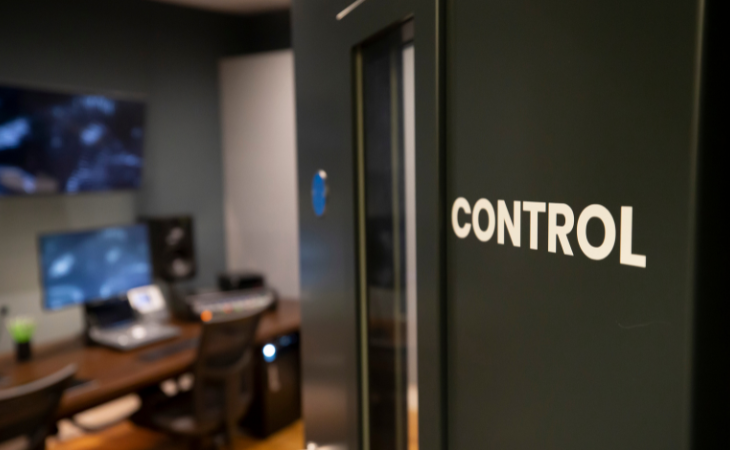
Directing & Recording
Studio Preparation
You have your budget in place, selected your recording environment, and locked in your cast. But before anyone steps into the booth, there's still some critical preparation needed to keep your sessions on track.
Without studio prep, things can go awry with time and budget being wasted. This phase is about ensuring the studio knows what to expect and is ready for action. That includes:
- Technical requirements
- Proper script formatting
- Clear asset labeling
- Consistent file naming conventions
- Context & prep documents for the director
The better the prep, the more efficient your sessions – and the better your performances. Professional studios can guide you on mic types and setups. Just start the conversation early and be open to creative solutions.
Script Preparation
Most VO scripts live in spreadsheets. Not because Excel is perfect, but because it's sometimes easiest. The golden rules of script prep include:
- One column per type of information
- No merging dialogue with direction
- Use of unique file names
- Consistent character naming
Context matters, too. Stage directions. Tone. Scene setup. Are characters shouting across a ravine or whispering? These details help find the right performance the first time, which saves time and reduces pickups.
Don't forget the technical details. Your audio engineer needs filenames to label what’s being recorded as well as the names of any reference videos; make sure what’s on your script matches what your assets are actually named. It’s so easy for these not to match if multiple team members are prepping for studio sessions.
Directing Recording Sessions
You are going to know your game better than anyone. But like any of the pros working on your game, an experienced performance director can enhance the game with their knowledge and skills.
They translate your creative vision into compelling vocal performances. They speak the actor's language – whether through theatrical references, cinematic comparisons, or subtle physical cues – getting the required performances while also maintaining momentum in the session. They know how to give actors room to explore and find their rhythm while making sure both the audio engineer is happy with sound, and you are excited about the performance.
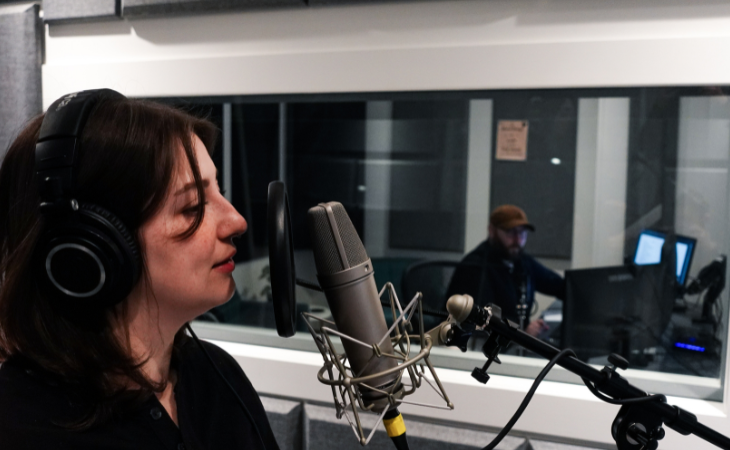
Recording Realities: Pacing and Pitfalls
Recording speed varies dramatically by what’s required and what may be restricting the performance. Can lines be recorded wild, without any time constraints? Or are they to be loosely timed to original language files? Strictly timed to mocap or animation? Lip-synced to facial capture or animation? You can usually speed up with barks (also known as shouts or short one-liners), but that slows down slightly if you have reference videos of, for example, specific sword swings or lunges.
The equation is simple: more constraints mean a slower pace.
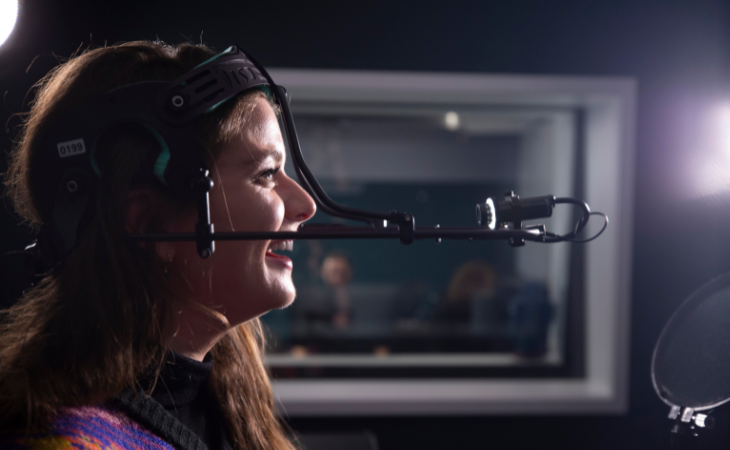
Beyond technical specifications, there's the human element. Actors wearing head-mounted cameras or facing bright ring lights aren't just navigating technical challenges – they're enduring physical ones. Breaks aren't luxuries; they're necessities.
Providing good context in the script and prepping your director is also crucial. This is why the most expensive words in voice production are "Let's figure it out in session." This seemingly innocent phrase can cost you thousands. Lack of context means actors are guessing what’s going on in the scene, and last-minute script changes drain precious minutes from your session time. Remember, there are at least three clocks running in session: the studio’s, the director’s, the actor’s – waste any of that time and the costs quickly add up.
Even planned complexities such as dual-actor sessions impact your timeline. In-studio motion capture of the face or body requires technical setup time with the actor, as does ROM (range-of-motion) capture before the VO recording begins. And while someone on hand to provide extra context can be great, multiple stakeholders joining remotely can create cycles of conflicting feedback.
The solution connects back to your pre-production and scheduling expectations. When budgeting time, factor in both technical constraints and human elements.
Quotes
“Providing good context in the script and prepping your director is also crucial. This is why the most expensive words in voice production are ‘Let's figure it out in session.’”
Script Tracking
Someone needs to log and track what's recorded, what take was selected, and what still needs coverage. At Side, we transfer scripts into a custom tool that manages this in real-time.
Other studios might have a script tracker present or notate printed scripts. Either way, clarity is key. If it's not tracked properly, it's not getting cleaned, mastered, or delivered.
The key is to be clear about who is tracking your script and planning your pickups before you go into the studio.
Production Management
Another essential player to include in your voiceover is a production manager. From the outside, it can seem like a simple process to start recording: send in a script, actors show up, files get recorded. But behind that seamless flow is a production manager busy coordinating everything:
- Prepping scripts for studio
- Scheduling actors, director, studio time
- Managing talent agreements
- Chasing assets and approvals
- Communicating across & coordinating teams
- Tracking session progress
- Adjusting schedules to keep things moving
For small teams, a strong production partner is a lifeline. For larger projects, they're why your VO pipeline doesn't implode under its own complexity.
Pickups
Even the best-run recording sessions will likely have some pickups. Lines get missed. Scripts change. QA flags issues. Pickups happen and should be part of your plan. For actors, a pickup session is just more time in the booth (and they're paid accordingly). But for your team, it's a mini-production cycle that needs time and budget. Pop pickups into your timeline so you can be assured that every line is perfect at the end.
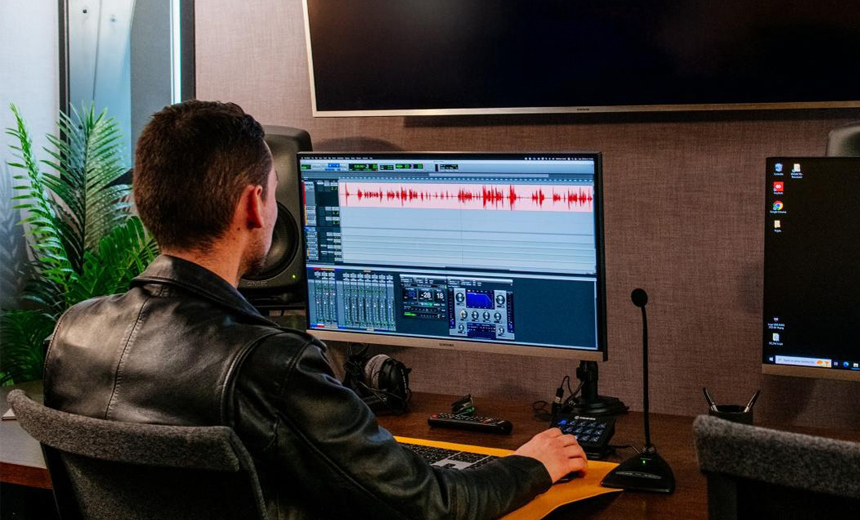
Post-Production & Implementation
Post-Production
Post-production is where raw performance becomes polished game audio.
At Side, we typically break it down into three tiers:
- Top and tail: The basics. Trimmed silences at file starts and ends.
- Editorial: Where most magic happens. Exporting, naming, checking for peaks and pops, basic leveling, and QA.
- Mastering: Deeper polish. Balancing tone, light processing, and matching across sessions and actors.
If your audio team is small, using a service provider for post saves time, as they've already worked with the files and know the most efficient way of getting everything cleaned to perfection, even if what you want is a more natural sound with coughs, laughs and pauses.
Just be clear on post-production expectations upfront and ask yourself, and your post provider, the right questions. What's included? What's extra? What do you actually need?
Implementation and Audio Integration
Once VO files are delivered, someone has to put them into the game. And by the time VO recording wraps that someone is usually very busy.
Late into your pipeline, your audio team may already be juggling music, SFX, and bug fixes. Suddenly, hundreds of VO files arrive, all needing to be placed, synced, and tested. Planning for implementation support early is essential. Some vendors offer it, like Side. But not all studios provide this service – so it’s worth asking in advance.
Crucially, if you are going to allow an external party to assist in implementation, getting right into your build, it’s vital to ensure that they have comprehensive IT support and security protocols before they get under the hood.
Setting Yourself Up for Success
From planning and budgeting to directing sessions and polishing final audio, game voiceover production is a multi-stage process where every decision matters. Miss a step in pre-production, rush through a recording session, or skip quality control in post – and those small gaps become expensive problems.
The difference between success and struggle in VO production is rarely about budget. It's about knowing what you need, when you need it, and having experienced partners who can deliver without the trial-and-error learning curve.
Whether you're managing a small indie project or a large-scale production with global localization, the fundamentals remain the same: plan thoroughly, work with the right people, and never underestimate the value of professional guidance.
Need a second opinion or a solid starting point? Let’s chat.