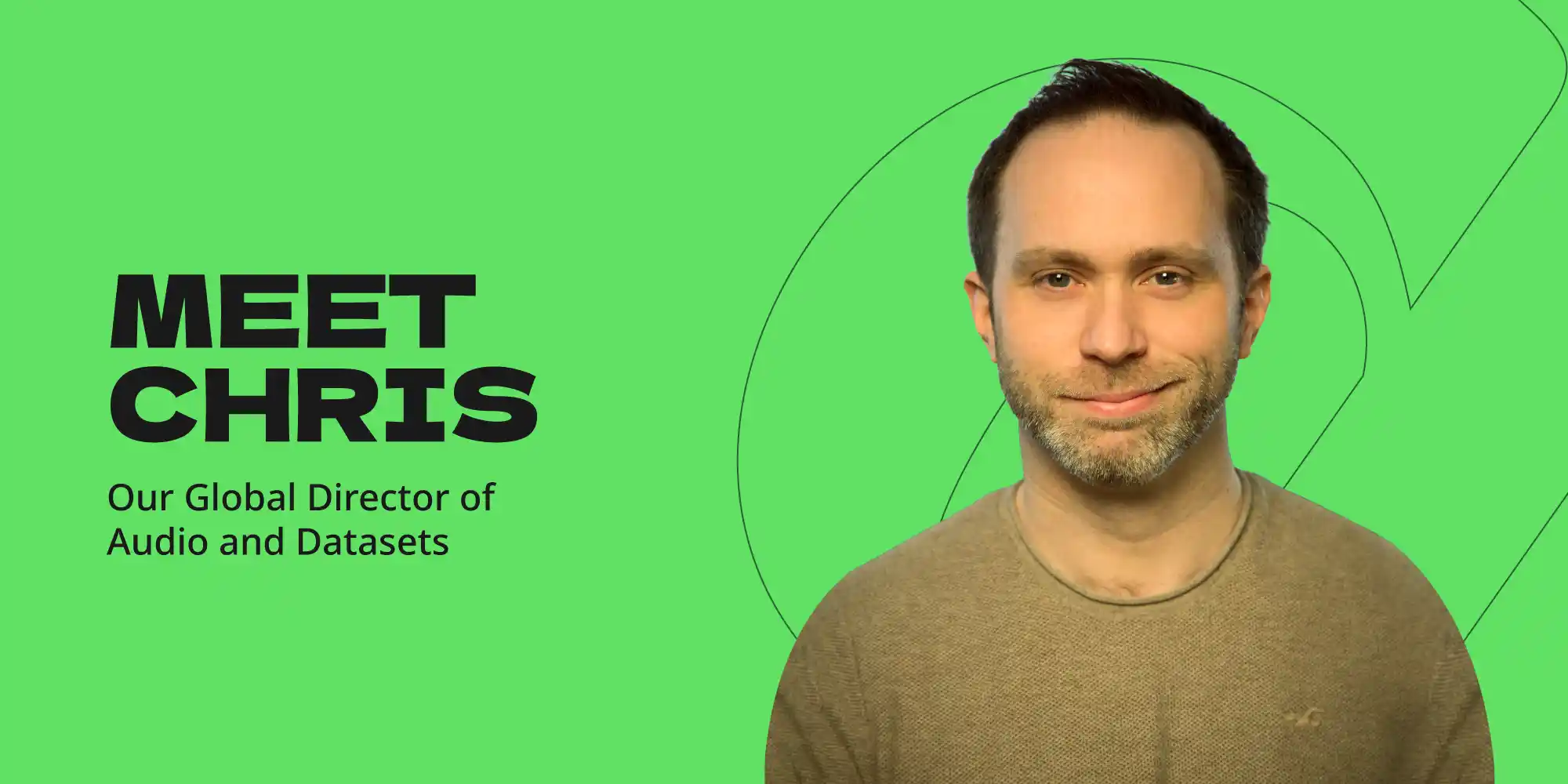
Chris Donnelly has spent the last decade working with Side, mastering the intricacies of game audio – from voice production pipelines to speech tech management. Now, as Side's Global Director of Audio and Datasets, he's leading one of the most comprehensive audio production teams in the gaming industry.
We sat down with Chris to talk about what sets Side's audio services apart, and how audio production in games has evolved alongside increasingly complex global pipelines.
Tell us about your background and how you ended up working in audio production in the games industry.
I was called completely out of the blue by a recruiter when I happened to have been made redundant at my previous job. I’d never heard of Side before the call, but I was extremely excited for the opportunity. I started as a Production Manager and I gradually moved up within the company, and all these years later, I’m here! Being in this position is something I'm extremely proud of.
Can you describe your role as Director of Audio & Datasets at Side?
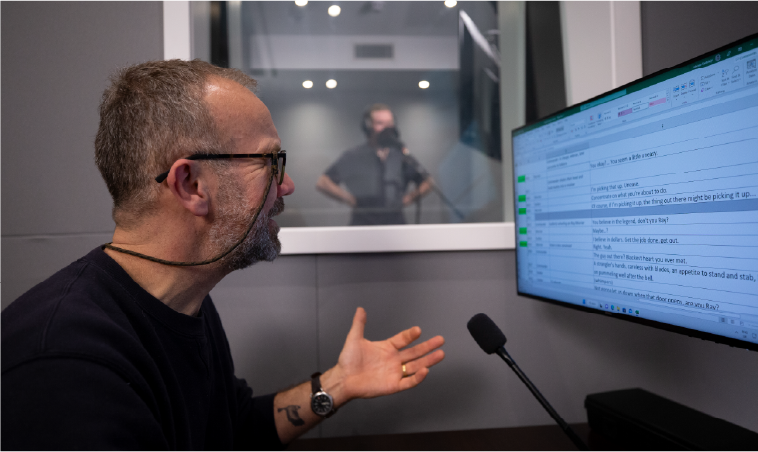
I oversee all of the audio recordings that we do, both for all of the video game work that we do and across all the different sites that we own and operate. That also includes presiding over our datasets work, which typically involves recording speech sets, that we do for companies in the tech space – along with oversight of our sound design and music work.
I'm also the highest point of escalation for these projects. I manage the teams, have high-level discussions with clients, work out the best way to solve any requests (especially for unusual cases), and ensure that we maintain our quality standards.
You’ve worked many different roles with Side. How have Side’s audio services evolved over the years along with the wider industry?
Side’s evolution, particularly its expansion, has been amazing to see. We’ve gone from one location in London founded over 30 years ago, much smaller than we are now – to having six audio locations today including LA, Montreal, Paris, Tokyo, and Shanghai.
We've also expanded our pool of voice recording partners from five or six languages to working with over 85 different partners around the world. It’s been tremendous in terms of where we're doing recordings – the volume of recordings has skyrocketed, too. We've had the pleasure of working on all sorts of fantastic projects and with amazing clients.
As our studios and partners have grown, so have our teams. I've seen many members come in at junior roles and then progress into senior roles. People like Simonne Stoneley, who started as a Production Manager – she then worked her way up to Senior PM, Lead PM, and is now Head of Production for our entire team in London! It's been very gratifying to see people developing and growing with the team.
In terms of the industry, we've seen a broadening of the number of clients and developers from many different countries that are now able to access our services, particularly Asia. Establishing that footprint has been vital. Personally, I enjoy the growth in diversity that games have seen. The ratio of lead characters that are women is significantly higher than it was. All the different accents, backgrounds, and countries that characters come from in these titles are incredible.
How do you build global audio teams with a cohesive company culture? And how do you maintain quality across those teams?
In terms of building a cohesive company culture, we've tried to integrate any new sites into the culture that we've maintained since Side’s beginnings. I always aim to set a standard of being as helpful as possible, promoting kindness, and making sure people know who to go to if there are problems. Projects can be unexpectedly difficult, and mistakes happen. It’s important for people to be able to come to us to figure out the best way to make things work. I don't ever want people to think or feel that they'll be met with harsh criticism. It's all about making people comfortable so they can have those discussions.
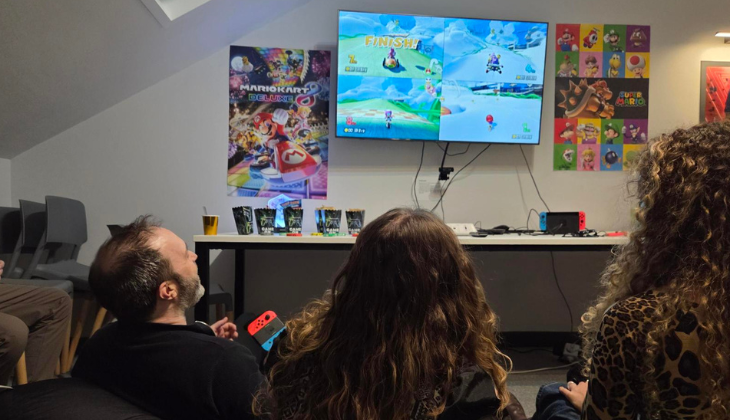
It's also important to have fun. We're not just corporate; we can actually be quite silly as well. For example, every year on the last day I'm in the office before the Christmas break, I wear a unicorn onesie. I did it my first year and have done it ever since – people expect it now. It was important when I was a PM to show that people could relax and be silly, and it's still important now as a leader.
On maintaining quality, it's about having clear workflows, training, guidance, and making sure we have people with the right expertise overseeing the teams. But again, it's about ensuring people feel comfortable asking questions and raising concerns. High standards are important, but people need to be able to develop and learn without fear of being made to look bad – which is a huge part of maintaining quality.
What do you think makes a successful partnership between developers and an external audio studio?
Successful partnerships are founded on transparency and communication. As a developer, you want to be as detailed with your information as possible, and as an outsourcer, we aim to integrate ourselves with our clients’ teams as much as possible.
For example, having samples of scripts ahead of time means we can identify concerns and help address them. Good quality bios for characters are important, too, not just for major characters, but also for minor ones. Because clients are outsourcing to us, it often means their internal team has less experience in our field. Sometimes, something routine for us is brand new to them, so the earlier we get that information the better we can advise them.
The great thing about working at Side is the collaborative problem-solving. If clients have concerns or something specific they want to achieve, we can workshop it.
A good example is a title we worked on in the Battlefield series. The developers wanted more realistic soldier group sounds, so we put actors on a sound stage, made them carry sandbags to capture the sound of real exertion. It worked brilliantly and came from collaborative brainstorming.
We also consult on behind-the-scenes content, direct actors, and hardware – like which microphones to use for specific situations. For instance, it might make sense to use one mic for dialogue and another for internal monologues to achieve different sound. It’s really having those discussions with clients on the best approach to achieve their goals.
Quotes
“Successful partnerships are founded on transparency and communication. As a developer, you want to be as detailed with your information as possible, and as an outsourcer, we aim to integrate ourselves with our clients’ teams as much as possible.”
What are the biggest opportunities that you see for audio and datasets in 2026?
We're keeping an eye on what the newest technologies are bringing to the picture and how it can complement our work. We always have a huge focus on quality.
Two areas that are very exciting for us are a continued push into Music and Sound Design work, where we are seeing great new clients and some fantastic titles.
In terms of Voice Production opportunities, I think diversity and the range of locations we're being asked for is also growing. We’re pushing into regions like Africa or South America that have been traditionally less represented.
There's also a continuing wave of new development, particularly coming out of Asia. We're working more and more with Asian clients and on Asian-led games. That's a large industry trend coming through.
What is your vision for Side's audio team as it continues to grow and innovate?
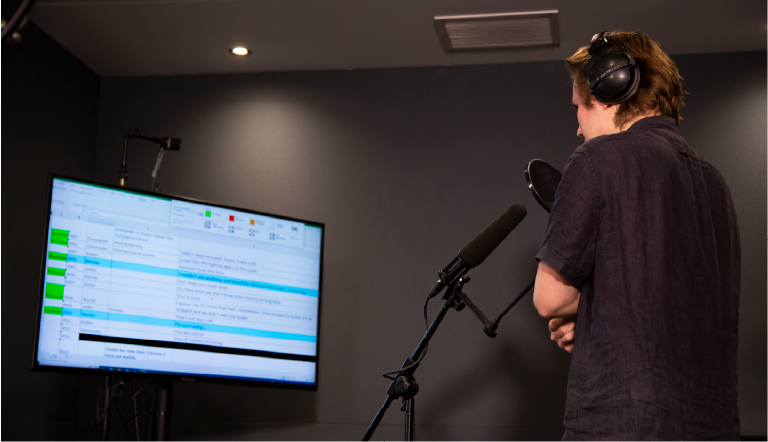
Our vision is to keep innovating. We’re continuing to develop our own technologies to improve our processes and quality of service – both for our teams and getting the best possible performances from talent. We're developing a new script tool to replace our current one, which will be significantly better and have a big impact on recording speed and performance.
But overall, we want to see even better development paths for our teams and more internal growth opportunities. And we want to consolidate our reputation for quality and for superior collaboration with clients.