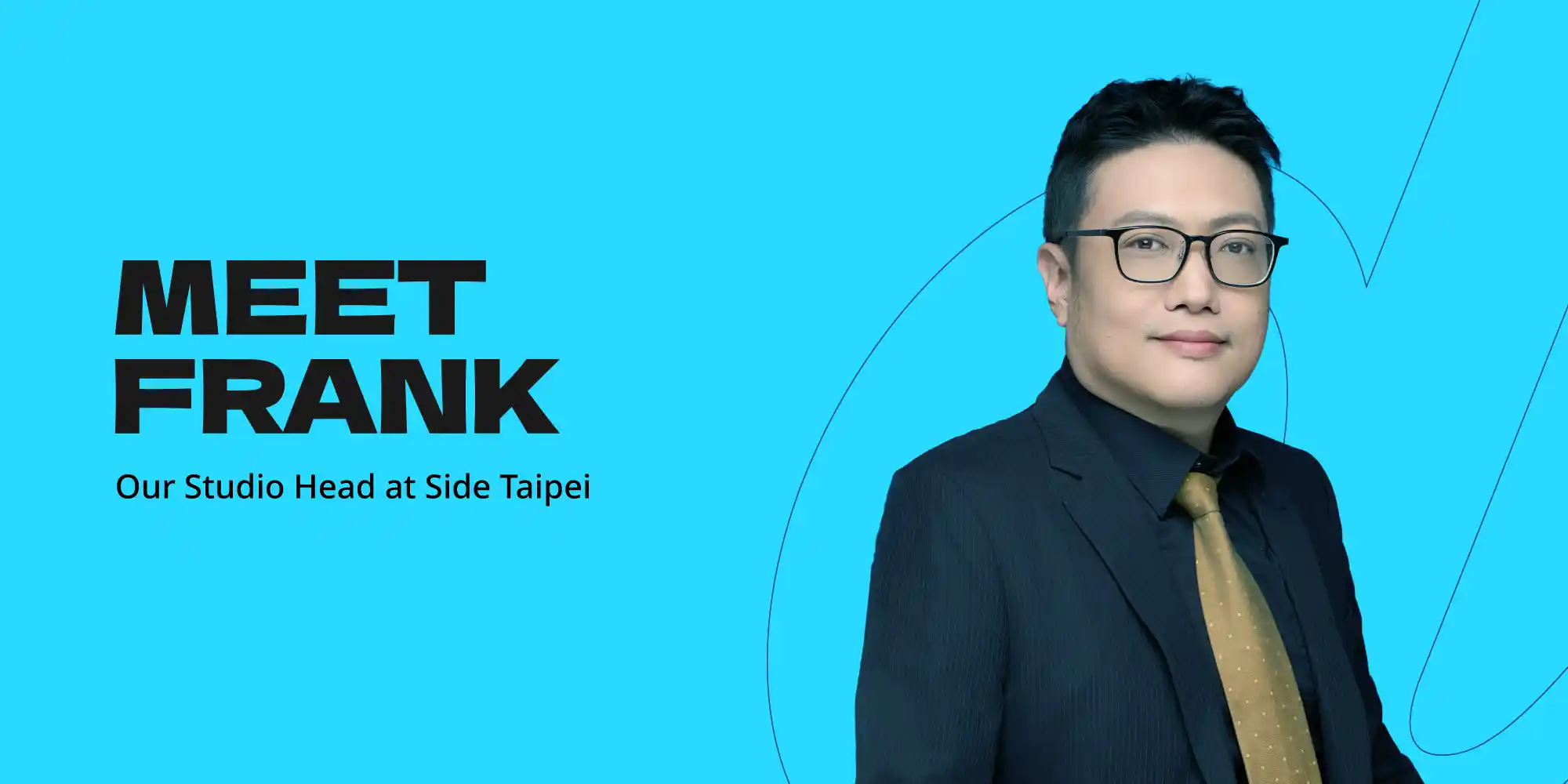
Having recently expanded our studio in Taipei, we’re excited to introduce you to the leader spearheading our operations in Taiwan.
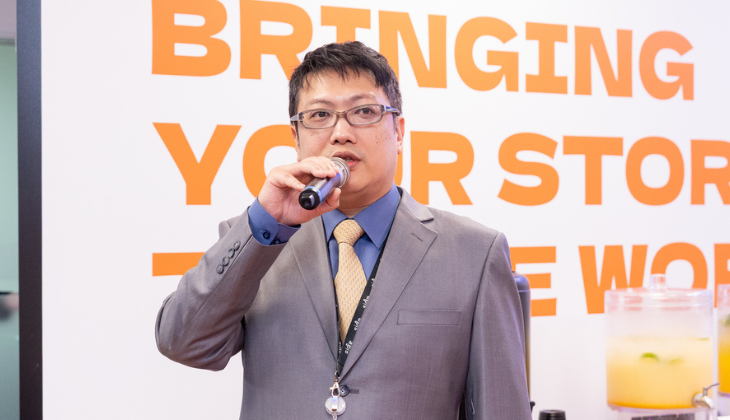
Meet Frank Chang, our Studio Head for Side Taipei. With deep experience spanning game design, production, and localization across some of the industry’s biggest titles, Frank brings the strategic expertise to deliver localization, localization quality assurance, and quality assurance services to game developers locally and globally.
We sat down with Frank to discuss his path into leadership, the unique strengths Taipei brings to Side's global network, and what it takes to build a studio that stands the test of time.
When did you realize you wanted to work in games? And what was the first step you took towards landing a career in the industry?
It all started when I got my first console – a Nintendo NES, a reward I earned in elementary school after achieving a perfect score in every subject. Like many of the families in my community, mine valued academics and stability, so gaming wasn't seen as a viable career. But that NES opened a completely new world filled with creativity, world-building, and systems that I couldn't stop thinking about. That passion stayed with me. Today I have over 3,500 games in my Steam library alone. I genuinely live and breathe games.
I took my first real step into the industry when I received an offer to work as a game designer. From there, I moved through several roles, including senior game designer, producer, and development director. Later, an opportunity came up to support game localization at Blizzard, where my gaming knowledge and language skills were put to use. During that time, I supervised more than 30,000 lines of Traditional Chinese voice-over across StarCraft II, World of Warcraft, and Hearthstone.
As I transitioned into more senior management roles, I became increasingly passionate about team building and organizational structure. Much like in city-building or base-building games, I found a deep satisfaction in shaping a system that evolves and thrives. Watching teams flourish is one of the most rewarding parts of my career.
What’s the one thing you wish you’d known before becoming a studio head?
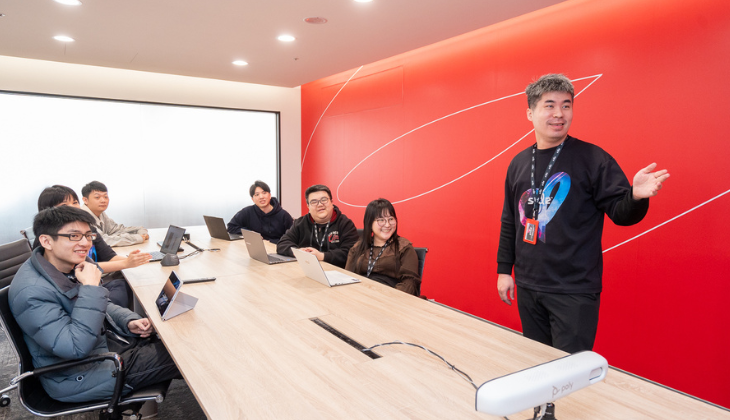
That I don't need to be the best at everything. Leadership isn't about individual mastery, but rather about helping others excel and creating an environment where talented people can operate at their best. My job isn't to hold everything together myself – it’s to mold and continually improve the system so it can support itself and the people within it.
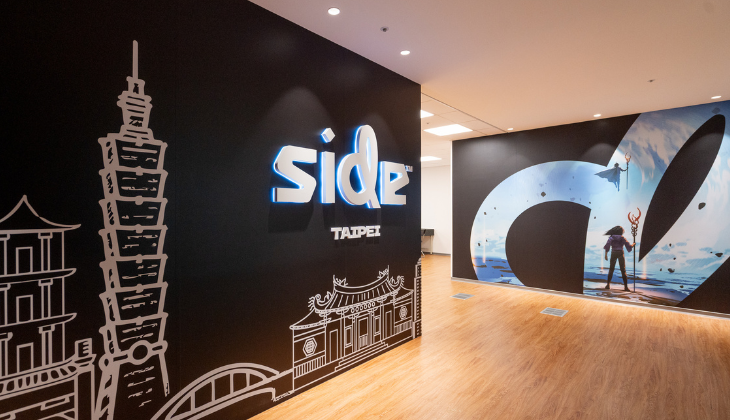
What do you think is the most unique aspect of Side's Taipei studio?
Taipei is a true example of east meets west. While the team is rooted in Traditional Chinese language and cultural traditions, we’ve grown up surrounded by Japanese anime, manga, Korean pop culture and dramas, and American films, TV shows, games, and superheroes as part of our everyday lives. This has influenced our multilingual talent with global awareness and an instinctive understanding of player expectations across different markets.
It's a combination that naturally produces people who think globally and bring cultural nuance to everything they do. Beyond just a service hub, our team has become a strategic partner that elevates every project we support.
It's an exciting time for Side Taipei with a newly expanded studio. Going forward, what would you most love to see the Taipei studio achieve?
I want Taipei to become one of Side's most scalable and strategically essential studios – to be the one clients turn to when the stakes are high, because they know we deliver. And to move toward that goal, we're focusing on three core principles: sustainability, continuity, and transparency.
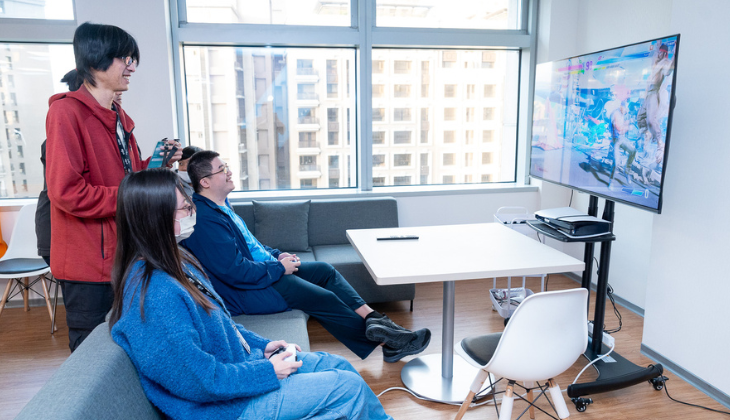
Our studio is built on durable processes, support structures, and a culture where teams can operate smoothly even when a given member is absent. We have a team that supports one another where needed and keeps momentum without disruption. Clear workflows and communication also help us stay aligned across Side’s global teams and partners.
Beyond strengthening our current lines of business, I hope to use my background in game development and audio to help Taipei grow new service capabilities over time. We have the talent and cultural strengths to support additional services, whether it's rapid prototyping, or continuing to build stability and depth in the areas we already excel in.
What are the biggest challenges and changes you’ve seen in the industry over the years?
The biggest challenge in recent years has been helping our teams adapt to the rapid development of AI tools. The pace of change has been intense, and it’s not always immediately clear how new technologies should be applied in a production environment without creating risk.
My focus has been on making sure AI supports our people rather than replacing good judgment. That means investing time into coaching and creating space for open learning and discussion on these tools. When teams feel supported rather than pressured to “keep up,” they’re far more confident to experiment and use new tools in ways that genuinely improve the work – of course, while always staying compliant.
If you were stranded on a desert island and could only bring one gaming setup and one title, what would it be?
I’d bring a PC, mouse, and keyboard, and a game with endless replayability – something strategic and that’s rewarding over time. Probably an Anno title, Romance of the Three Kingdoms, or a Civilization game. These are games that challenge us to refine our approach and achieve better outcomes with every playthrough.