
Earlier this year, I served as the guest author on the 2026 XDS Insights Report on external development in the video game industry, supported by our team at Side for data analysis.
One of the report’s biggest takeaways was the strong optimism among game developers and publishers, reflecting the growing role of external development in game production. 98% of developers and publishers were confident their external development needs would be met in the coming year, and 86% of service providers felt optimistic about reaching their business targets.
But that outlook comes with caveats. The survey also highlighted clear pressure points – pricing, budget expectations, and AI – where developers, publishers, and service providers don't always agree.
At the External Development Summit (XDS) 2026, I also hosted roundtables where people from across the industry came together to dig into those tensions, and the conversation kept coming back to communication.
As the year draws to a close, I’ve been reflecting on the report’s findings and the conversations we’ve had since. Together, they paint a picture of an increasingly mature external development ecosystem, but one still navigating challenges around communication, pricing, and trust. So, where are the biggest gaps, and what can developers, publishers, and service providers do to close them?
What’s Changed in External Game Development on the Other Side of the 2026 XDS Insights Report?
A big trend that came through is that external development is far more planned for and relied upon than in previous years. We’re seeing more long-term partnerships and fewer emergency, one-off engagements.
The report found that confidence in external development is high, but increasingly conditional. For developers and publishers, it now depends on how budget pressure, delivery predictability, and operational reliability play out. Service providers seem a little more wary. It’s hard to say exactly why, but in our XDS table-topic discussion, people pointed to widespread uncertainty in their partnerships.
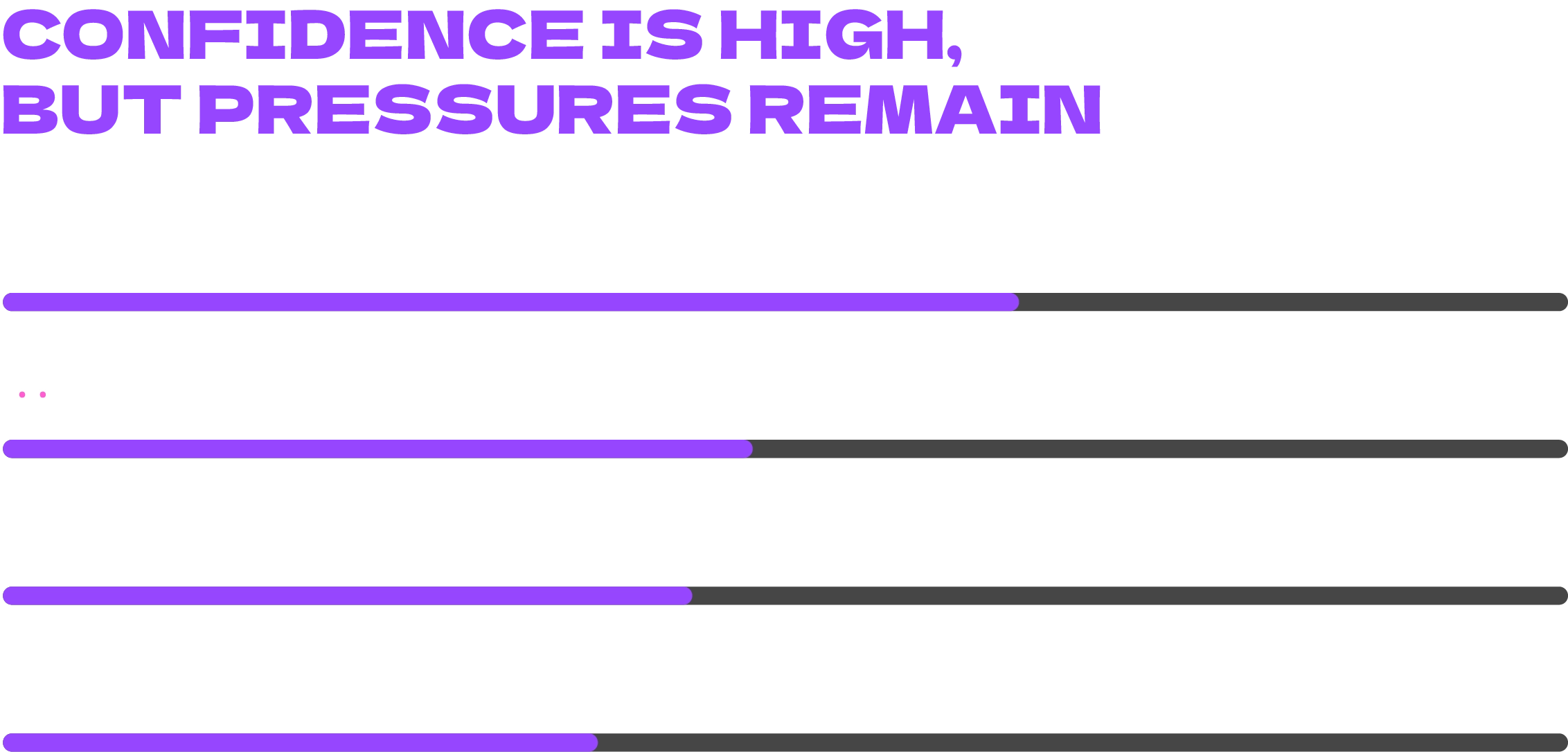
The numbers back that up: project cancellations topped service providers’ concerns (65% of respondents), while AI implementation (48%), unachievable budget expectations (44%), and studio closures (38%) were also high.
Those pressures rarely stay contained. A cancelled project or a late scope change ripples into communication, pricing, and planning, and that’s where the gaps between the two sides start to show.
Are External Development Partnerships Becoming More Transactional or More Long-Term?
External development partnerships are becoming more long-term, though budget pressure still pushes some of them toward transactional arrangements.
What I’m seeing, and what came up in our discussions, is that studios increasingly want ongoing relationships rather than a new provider for every project. A studio might want one partner managing QA across several titles over several years, for example, rather than for a single release.
The report points the same way. Developers, publishers, and service providers all name retainer agreements as a top contract preference, which we interpreted in the report as a shared shift toward continuity. Developers and publishers also show a large year-on-year jump in the importance of trust, communication, and track record when choosing a provider.
But it seems some projects and business needs still call for a short-term, transactional approach too. Those retainer preferences may differ from the models teams can actually secure. Budget pressure and procurement requirements can pull studios toward more transactional arrangements, and priorities may keep fluctuating as the industry changes.
A short engagement only requires you to align on a small number of things. A long-term partnership asks both sides to understand each other much more deeply. That's where the importance of communication comes in.
What's Behind the Communication Challenges in External Development?
Communication challenges in external development often come down to timing and clarity. The report found communication is now the top friction point for developers and publishers, overtaking delivery and security issues, and service providers reported a similar rise. As external teams become embedded in pipelines, the structures around them have to keep up, including who owns decisions, who can access which information, and how issues escalate.
It’s also a broad term: “communication” can mean timeliness, such as passing on a change as soon as it’s known. It can also mean the content of a message, how direct the feedback is, or whether expectations were clear.
Take timeliness. Production timelines rarely hold still, so partners are often working from information that has already moved on. Partners generally share what they can, when they can, but decisions get made at a certain level, and by the time they reach the external development relationship, everyone may wish they had arrived sooner.
Culture adds another layer. As teams become more global and hybrid, a shared language isn’t enough, since what reads as constructive in one culture could come across as harsh in another. Only 8.5% of developers and publishers work in an office, compared with 24.7% of service providers, which the report also flags as relevant to coordination friction.
Communication will need to keep pace with production and with the partnerships now being built. It merits more detailed research, and it remains one of the most important unresolved challenges in external development.
What Does a More Mature Partnership Look Like?
A more mature partnership holds onto long-term continuity, even when tight budgets and procurement processes favor short-term, project-by-project deals. Both sides need to commit to the relationship itself by choosing carefully who to build with, communicating well, and being equally invested in making it work.
That’s why a partnership mindset matters more than a transactional one. It takes commitment from developers, publishers, and service providers alike. The result should be better work, because both sides understand each other more deeply and are investing in a relationship rather than treating every engagement as a one-off transaction.
The games industry is still maturing here, so there may be value in looking at how more mature industries manage long-term supplier relationships. Film is one example, particularly for long-term creative partnerships and planning around scarce talent or capacity. Technology offers another model, with more formalized service agreements and different tiers of support. Games may ultimately borrow from both.
Quotes
“The result should be better work, because both sides understand each other more deeply and are investing in a relationship rather than treating every engagement as a one-off transaction.”
How Do Both Sides Balance Cost Pressure and Delivery Expectations?
Rates are where the gap between cost pressure and delivery expectations shows up most clearly. Developers and publishers will pay premium rates for specialist, high-impact services, but manage costs tightly in scalable production disciplines. Meanwhile, service providers say “premium pricing is becoming the norm.” What gets budgeted doesn’t always match what service providers say they need to charge to deliver sustainably.
Procurement is part of the explanation. As large-scale RFPs gain influence, cost can take precedence over quality and delivery timelines, so the challenge is finding common ground between procurement priorities and production needs.
Rates themselves have largely stabilized after several years of falling, which suggests the market has hit a floor and marks a notable shift in game outsourcing trends. Increases are selective, showing up in specialist services like audio, localization, QA, and programming. People generally reach an agreement in the end, but pricing remains a source of friction, particularly for service providers already under financial pressure.
Scope matters as much as price. Late-stage scope, capacity, or timeline changes concerned 21% of service providers, and retainers, a top preference on both sides, offer a way to plan capacity more predictably.
Is AI Governance in Game Development Really a Question of Trust?
AI is the other gap between service providers and developers/publishers, and it shows up first in adoption. The share of developers and publishers saying no to AI in their external pipelines nearly doubled, while service providers continue to lean in. In our XDS table-topic discussion, some service providers felt the burden of AI innovation sits more heavily with them, with an uncertain return. Teams can invest heavily in AI-assisted workflows only to find them expensive or no more productive.
The wider picture is still unsettled. AI’s promise is still being tested, and the friction centers on usage, implementation, data ownership, and indemnity. The industry hasn’t yet landed on a standard operating model for governance, and AI adds operational uncertainty rather than removing it.
Disclosure is the biggest priority for both sides (29.2% of developers and publishers, 27.7% of service providers), who want clarity on when AI is used, where, and how it affects the work.
Transparency in outsourcing reaches beyond AI. Subcontracting is commonplace, with 42% of developers and publishers saying their service providers subcontract and 53% of service providers accepting subcontracted work. The report notes this turns quality control, security, and schedule adherence into multi-hop challenges, so it matters to know not only who you partner with but who is actually doing the work.
Trust sits underneath all of it, though the questions differ by side. Developers and publishers ask whether a partner will use AI ethically, protect their data and IP, and avoid training models on proprietary material without permission. Service providers ask whether clients will keep recognizing the value of human expertise and creativity as AI makes some processes faster or cheaper.
Whether the issue is rates or AI, communication runs through both, and compromise starts with each side understanding the other’s constraints.

What Should Developers, Publishers, and Service Providers Do Differently?
For anyone refining their external development strategy, most of what helps comes down to sharing information earlier and being clear about expectations. Each side has a part to play.
Developers and publishers can start with timing. Passing on changes as early as possible, especially cancellations and scope shifts, gives partners room to plan, and it helps to map how information travels from decision-makers to the external team. Bringing procurement and production into the same conversation early means cost, quality, and delivery are weighed together instead of traded off later. And because AI expectations are still unsettled, it’s important to spell them out in agreements, including when AI can be used, how data is handled, and whether it can train models.
Service providers can match that with transparency. That means disclosing when, where, and how AI is used and how it affects the work, and being upfront about who is doing the work, including any subcontracting. Explaining what your rates cover helps too, so pricing conversations start from shared assumptions.
Building Stable External Development Partnerships
As the year wraps up, the report’s cautious optimism seems to be holding. Game development outsourcing is now a planned, established part of production, and both sides want it to last. Making that happen is a shared job, and it comes down to getting information to partners sooner, being open about how work gets done, and investing in the relationship.
Want to help shape the next report? Surveys for the 2027 XDS Insights Report are open to developers, publishers, and service providers until December 1st. And be sure to keep an eye out for the full report in 2027!
To hear more from Kaley and the XDS team looking back on this year’s report, tune into “The State of External Development” episode of the XDS Spark podcast below.