So, you want to make a game? One individual's journey to make a dream come true
What does it take to go from having a game idea to actually building it?
For Matt Raimondo, founder of 762 Interactive, the answer was finding the right partner.
After a decade in corporate finance, Matt decided to create the game he'd always dreamed of playing. But turning that vision into reality meant navigating an entirely new industry. His research ultimately led him to Side.
Working with Breno Rodrigues, one of our game designers in São Paulo, Matt spent five months transforming his initial idea into a professional Game Design Document. The result: an industry-standard blueprint that development teams could actually execute.
We sat down with Matt to learn about his journey and get an insider's perspective on the process behind turning a game development dream into reality.
Tell us a bit about your history and fandom for games. What were your favorite games growing up?
One of my first gaming memories was when my dad brought home Quake in the early 2000s. I remember booting it up on one of those big-boxy Windows PCs. Despite the immense struggle, I was hooked. That's where my journey into gaming began.
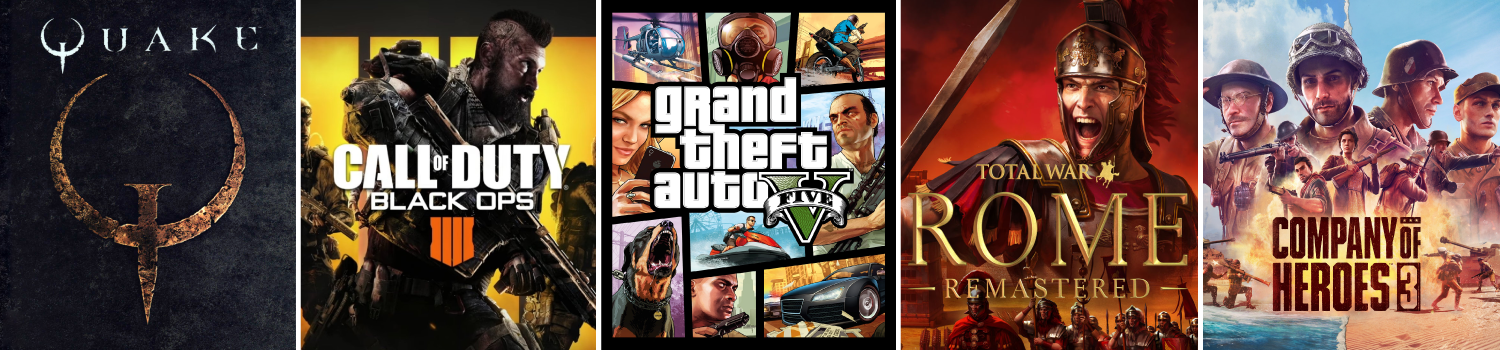
Looking back on my childhood, I loved just about every game I got my hands on, whether it was on console or PC. Shooters like Halo, Call of Duty 4: Modern Warfare, and GTA IV really drew me in. But it wasn't just the action that excited me – I also enjoyed strategy and simulation games. Titles like Rome: Total War, Company of Heroes, and Supreme Commander ended up being some of my all-time favorites.
This diverse range of interests really allowed me to appreciate the vast creative possibilities within the gaming industry.
Tell us more about what led you to game development. What inspired you to take that leap?
Games started as fun, but over time, they became something more. One childhood friend really shared my passion for games; I can still picture us counting down to new releases and rushing home from school to dive in. Looking back, we were playing Game Designer without even knowing it. We would debate mechanics, tweak ideas, and dream up ways to make the game better.
But for a while, life took me in another direction. My years in corporate finance gave me a strong foundation in strategy, discipline, and decision-making. It led to starting my first business: reselling and wholesaling video games, consoles, accessories, and electronics. It’s been successful and gave me the financial footing to pursue this next venture.
Initially, I was considering investing in a national franchise. But something felt off – I wasn’t sure if it was something I could really get excited about. That moment of hesitation got me thinking about my hobbies and what I genuinely loved.
And then it hit me: What if I made a game? What’s stopping me? At that moment, the answer was... nothing. After that, I went all in.
What kind of research did you do? How did you come to find Side?
At first, I was just trying to absorb everything I could, reading blogs, diving into Reddit threads, scrolling through discussion forums, and watching a ton of YouTube videos. As I dug deeper, I realized game development is quite similar to running a business.
Things started to click when I realized game dev follows many of the same steps: you create a blueprint (in this case, a Game Design Document), assemble a team, delegate tasks, build a prototype, collect feedback, and keep refining. Recognizing those parallels made the whole process less intimidating, and helped frame the creative chaos into something more structured.
I was also fortunate to meet Jared Yeager, a seasoned producer and all-around great guy. I must’ve asked him a million questions early on, and he was incredibly generous with his time and insight. Having someone like that to help connect the dots was huge.
Once I understood the basics, I started weighing my options: build a team from scratch, or partner with a Codev team?
I reached out to several providers, but ultimately chose Side. Their experience, structure, and global talent pool stood out. And after my first call with the team, I was confident they could help bring my vision to life.
Can you tell us a bit about the general concept of the game you had in mind? How did you go about conceptualizing the core idea of your game?
It’s a crime strategy and simulation game where players take on the role of a rising Kingpin, working their way up the criminal underworld. It blends tycoon-style management with a top-down ‘God View’ perspective, giving players control over everything- from street-level hustles to city-wide influence and power plays.
You’ll recruit criminals, manage production chains, set up logistics, fulfill product demand, battle for territory, and more – all woven into an immersive RPG-inspired narrative. It’s designed to blend deep strategic gameplay with meaningful choices and consequences.
My goal is to offer something fresh and engaging for fans of strategy and simulation games. I've often felt that many tycoon games don't delve deeply enough into certain mechanics, leaving a lot of potential untapped.
The team and I envisioned a game that combines the strategic depth of crime management with immersive storytelling. We don’t just want players to feel like they’re managing an empire. We want them to live out a gritty, evolving narrative.
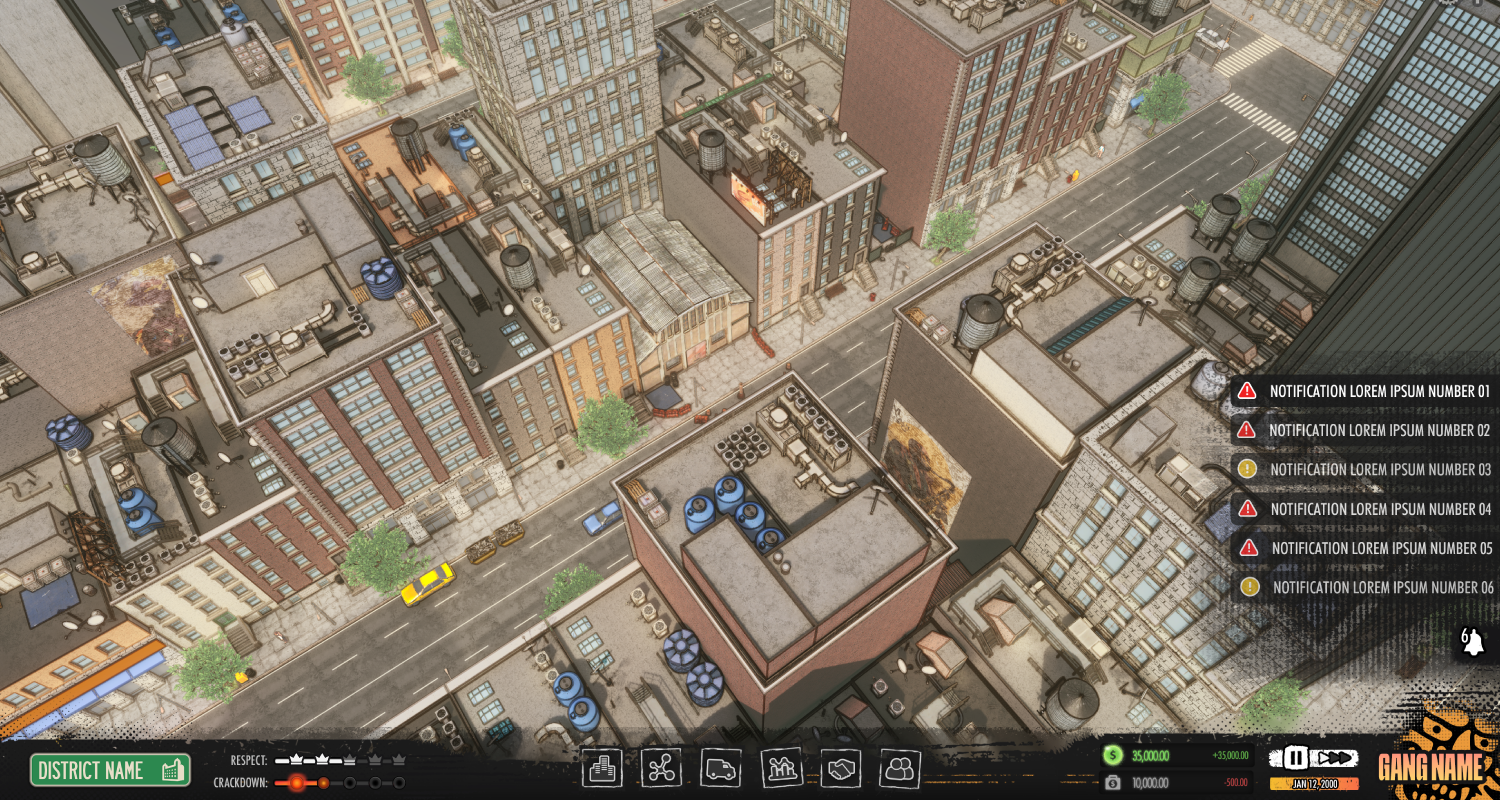
Work-in-progress shot of UI – Project Kingpin
What challenged you most when building your Game Design Document, and what have you learned along the way?
One of the first things I learned is how simple Game Design Documents (or GDDs) start – and how complex they can become.
I started by writing down the idea at a very high level. For example: “I want to make a game about racing cars.”
Then I started layering in the basics: “The player should be able to customize their car, choose a track, and pick opponents.”
Once those major components are in place, the next step is to outline the game’s core loop. This is where the real work – and the fun – begins. You start diving into each part of the loop to flesh out systems, mechanics, and features.
One of the best resources I came across was the YouTube channel of Masahiro Sakurai – director of hit games like Super Smash Bros. and Kirby. He uses the mantra: “Deconstruct, Analyze, Rebuild.”
 Deconstruct: What part of your game is actually going to be fun?
Example: I think customizing cars will be fun.
 Analyze: Why is it fun?
Example: Choosing decals, paint, rims, and tires gives players creative freedom and a reason to stay engaged
 Rebuild: Once you know what makes it fun, design systems that support it.
Example: We need a garage feature where players can view and customize unlocked vehicles with parts and decals.
I learned that it's important to start simple, then iterate. It’s much easier to refine mechanics once you can feel and test them, especially once feedback starts rolling in. Through the deconstruction process, you move from GDD V1 to Prototype V1 – and from there, refinement never stops.
If you can collaborate on your GDD, do it! Some of the best ideas and breakthroughs happen through conversations and asking more questions. Get your development team involved early. They can help translate the game design vision into a Technical Design Document (TDD), which maps-out systems and how they interact. Having both a strong GDD and a thoughtful TDD helps you spot and solve problems early, leading to a smoother path toward a playable prototype.
What was your original vision for gameplay mechanics? How did that change when you started working with Side's design team?
My initial vision was shaped by the games I played. I wanted to create a game that existed in pieces across several titles, but never fully realized in one place.
I kept finding myself saying things like, "I want my game to feel like this one," or "I loved mechanics 1, 2, and 3 in that game, but not 4, 5, and 6." That process helped me begin outlining what I wanted to build.
From there, I drafted the first version of my GDD. It started with just themes, inspirations, and some feature ideas. But once I started collaborating with Side, we translated those ideas into a tangible gameplay loop.
One of the most impactful changes that came from working with Side's design team was organizing the game around three core pillars: Economy, Diplomacy, and Power. Each of these pillars now has its own internal loop, and all of them connect to form the game’s larger loop. That structural clarity helped define how everything fits together, and made the systems feel much more cohesive. Side’s feedback, structure, and creativity really helped to mold the raw ideas into a far more complete, immersive experience.
One of the biggest lessons I’ve learned is the value of competitive analysis. We spent weeks analyzing genre-specific games with similar themes. We broke down core loops, mechanics, strengths, and shortcomings. We looked at game length, pricing, and – most importantly – identified the gaps where we could do things differently, or better.
That exercise, combined with our initial GDD, led to a much more complete V2, with clearly defined pillars and a strong gameplay loop. That became the foundation for our prototype, eventually resulting in a fully revised V3 of the GDD, which was just completed five months into development!
Quotes
Side’s feedback, structure, and creativity really helped to mold the raw ideas into a far more complete, immersive experience.
What's surprised you most about the game development process so far?
The most eye-opening part has been gaining a deeper understanding of the many different disciplines involved. I always knew there were a lot of moving pieces in game development, but you don’t really grasp it until you’re in the trenches.
What developers focus on is different from what game designers prioritize, which is different from what matters to audio production, artists, QA, and producers. Each team plays a unique role, and while they’re all connected, they function as distinct parts of a much larger puzzle.
Do you see your game as one for fans of a certain game genre? What do you want players to feel when they play your game?
Absolutely. This game is built for fans of strategy, simulation, and tycoon games – especially those who love crime-themed narratives. If you enjoy building your own empire and making high-stakes decisions that impact the world around you, this game is for you.
You start from nothing and build up an operation piece by piece. But unlike traditional tycoon games that stay surface-level, we’re pushing deeper into the systems and layering in narrative weight.
I want players to feel a mix of empowerment and tension, to feel like they’re growing something – making real choices, navigating rivalries, managing people, and carving out territory. There’s a thrill in watching your empire expand, but also real stakes and consequences tied to your actions. Ultimately, I want players to feel like they lived a Kingpin’s story.
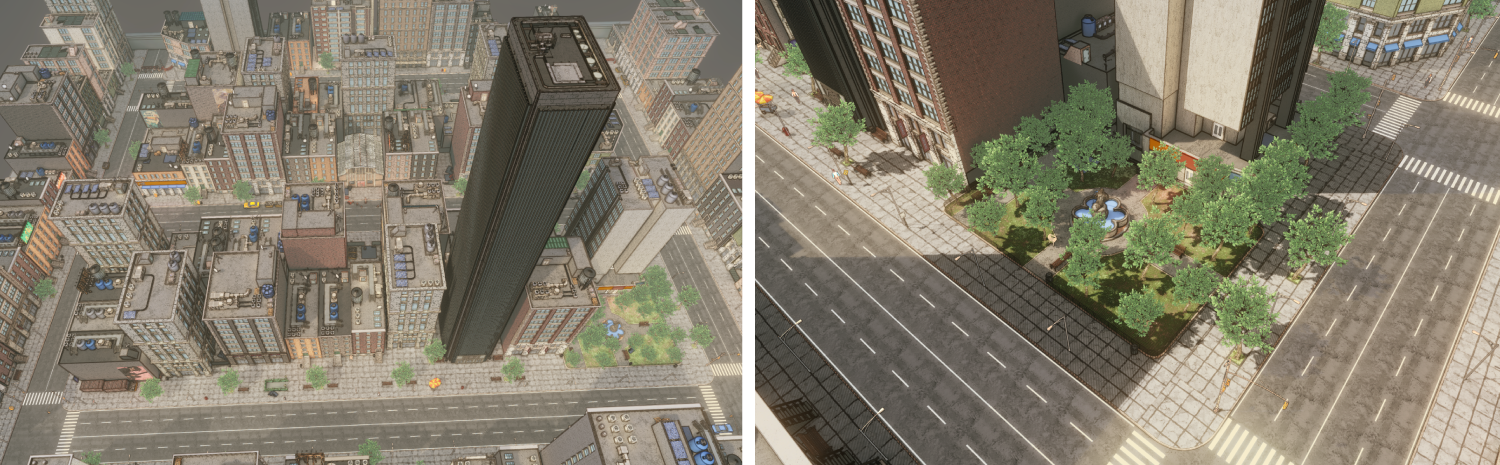
Work-in-progress shots of environments – Project Kingpin
What are you looking forward to in the next phase of this project? Can you tell us a little bit more about your near-term vision, and what lies ahead?
Right now, I’m most looking forward to completing the prototype and having our first fully playable version of the game. The team’s been working incredibly hard to get to this milestone.
Around the same time, we’ll be developing a new version of the prototype map – incorporating assets that reflect the visual style we’ve been aiming for, as detailed on our blog. We’ll also be integrating our newly upgraded UI art, which is really helping to bring the overall experience together.
Later this year, we plan to get the prototype into players’ hands and see what they think. I’m beyond excited for that moment. More than anything, I want my studio to build a strong relationship with players. As a gamer myself, I’ve been on the receiving end of half-baked releases or situations where studios clearly ignored the wants and needs of their player community. I know how frustrating that is, and I never want to be that kind of developer.
My goal is to create something iconic – something people look back on and say, “That was special.”

Follow along with Matt Raimondo and Project Kingpin at 762 Interactive.